DIY Bath Salts With Epsom Salt for Deep Relaxation
The expensive part of a spa soak was never the salt. It is the quiet, the warm water, and an hour nobody asks you for anything. These diy bath salts take ten minutes to mix, and I’ve noticed that a homemade jar on the shelf makes that quiet hour happen far more often.
This guide gives you the base ratio, both scent routes, the safety lines shops never print, five blends worth repeating, and the storage habits that keep a batch fresh for months. Nothing here needs a specialty shop or a free afternoon.
Why Epsom Salt Makes a Bath Actually Work
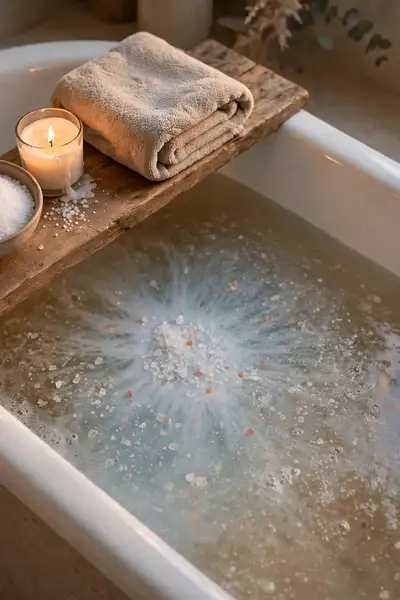
Plain hot water relaxes you for about ten minutes. What keeps shoulders down and a busy mind quiet for the rest of the evening is what dissolves into that water, and Epsom salt has done that job in home bathrooms for generations.
Epsom salt is magnesium sulfate, and a warm soak in it is the home remedy people reach for when muscles ache after gardening, workouts, or long shifts on their feet. Mixed with coarse salt, the grains dissolve at different speeds, so the bath stays mineral rich from the first minute to the last.
What You Need: The Base Recipe and Simple Swaps
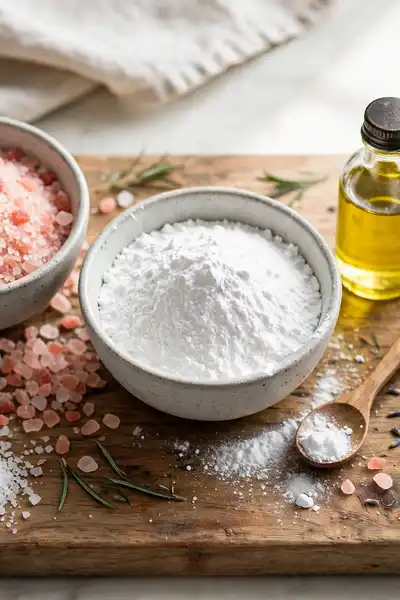
One batch needs five things, most already in a kitchen, and the base ratio never changes: two parts Epsom to one part coarse salt, with baking soda for softness. These diy bath salts cost a few dollars per jar and forgive swaps well.
- Epsom salt, 2 cups: the base of the batch and the reason the soak works. Any plain, unscented bag is right.
- Coarse sea salt or Himalayan salt, 1 cup: adds texture and a slower dissolve. Table salt is too fine and can sting small cuts, so skip it.
- Baking soda, half a cup: softens the water and takes the edge off dry, itchy skin.
- Carrier oil, 1 tablespoon: sweet almond, jojoba or melted coconut oil, so the scent spreads evenly instead of floating in drops.
- Your scent, from the next section: essential oil drops, or dried petals and herbs for the oil free route.
Also View: Easy DIY Bath Bomb Recipe for Fizzy Relaxing Soaks
With or Without Essential Oils: Both Work

Quick Tip: The oil free route is not the weaker route. Dried lavender buds, rose petals and citrus peel scent a batch gently for weeks, and they make the jar prettier, which is half the reason these salts get photographed.
Choose oils when you want a strong scent: relaxation blends work at ten to fifteen drops per batch, rubbed through the salts with the carrier oil so every spoonful smells the same. Choose the botanical route for sensitive skin, for children, and for gifts, where an unknown allergy should never be part of the present.
The Base Method, Step by Step
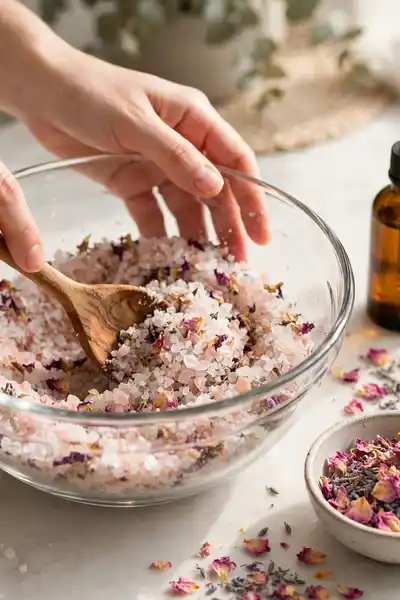
Six short steps stand between a pile of plain salts and a jar worth photographing, and the order matters more than the effort. Oil goes onto dry salts before any petals arrive, and the jar waits until the mix feels dry again, or the whole batch clumps by Friday.
- Combine the salts: tip the Epsom, coarse salt and baking soda into a dry bowl and stir for a full minute, until no pocket of one ingredient remains.
- Add the carrier oil: drizzle the tablespoon over the surface and rub the salts between your palms, the way you would rub butter into flour.
- Add essential oil, if using: ten to fifteen drops over the oiled salts, then stir again so no single spoonful carries the whole scent.
- Fold in dried flowers or herbs, if using: two tablespoons at most, added last so the petals stay whole and visible.
- Transfer to an airtight jar: fill to the shoulder, tap the jar once to settle the mix, and seal it straight away.
- Let it sit before first use: twenty four hours lets the scent spread through every grain. A batch used the same hour smells uneven.
Safety First: Skin, Scents and Who Should Skip
Do This:
- Patch test a new scent on the inside of your wrist and wait a day before the first full soak.
- Keep essential oil at ten to fifteen drops per batch; bath water does not dilute oil the way people hope.
- Use dried botanicals instead of oils for children, and keep their soaks short and lukewarm.
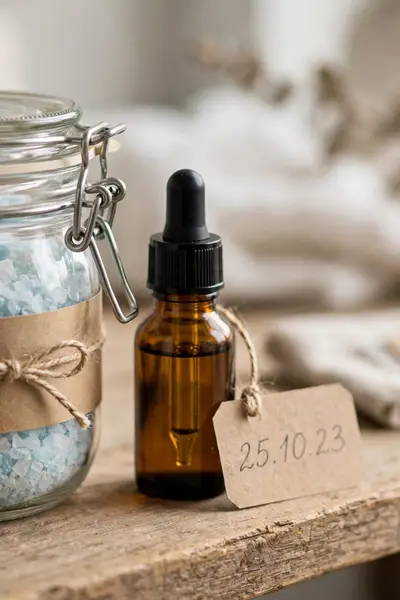
- Label every jar with its scent and its date, even the ones staying in your own bathroom.
Avoid This:
- Adding undiluted essential oil straight into running bath water, where it floats and meets skin at full strength.
- Using hot, strong soaks during pregnancy or with broken skin without asking a doctor first.
- Leaving the jar open on a steamy shelf between baths.
- Guessing a blend for someone with asthma or scent sensitivity as a gift.
None of this is meant to scare anyone off a bathtub. Salts themselves are gentle; almost every bad story starts with too much oil, water too hot, or a soak that ran too long. I’ve noticed the careful makers are also the relaxed ones, because nothing about their bath is a surprise.
How Much to Use and How Long to Soak
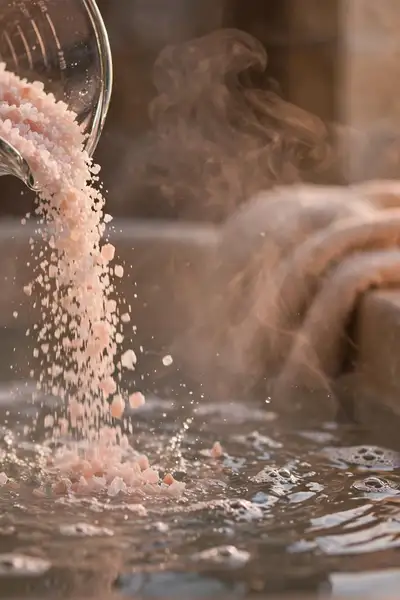
Per Bath: Half to one cup | Water: Warm, not hot | Soak Time: Twenty to forty minutes | Best Time: The last hour of the day
Start at half a cup while the tub fills, swishing the water once so the grains meet the warmth and dissolve instead of settling under you. Forty minutes is the ceiling, not the target: skin wrinkles, water cools, and the calm peaks well before that. Step out slowly; warm muscles stand up lazily.
Five Scent Blends Worth Repeating
What You Need:
- Deep Sleep: lavender 8 drops, cedarwood 4 drops, for the last bath before bed.
- Muscle Mend: eucalyptus 6 drops, peppermint 4 drops, rosemary 2 drops, after training or gardening days.
- Citrus Lift: sweet orange 8 drops, lemon 4 drops, for grey mornings and low moods.
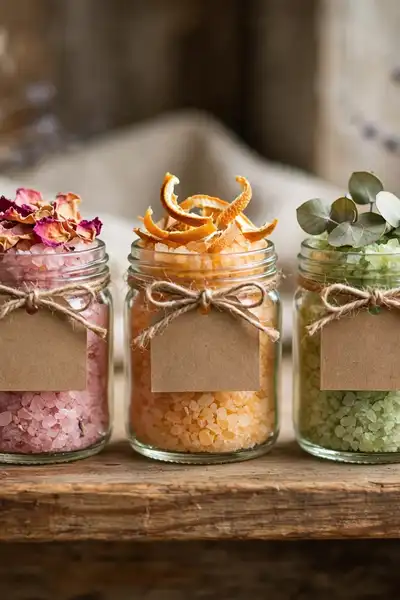
- Rose Calm: rose petals two tablespoons with geranium 5 drops, the blend jars are gifted in.
- Vanilla Comfort: vanilla fragrance 8 drops with a pinch of dried chamomile, soft and bakery warm.
Treat these ratios as starting points per base batch, not laws. Sniff the jar after its rest day and adjust the next batch by two drops at a time, writing the change on the label. Within three batches you will own a house blend nobody else sells, tuned to your own water and your evenings.
Beyond the Bath: Other Uses for a Batch

A jar of bath salts earns its shelf space on the weeks when a full bath never happens. The same batch works as a foot soak in a basin after a long shift, and tired feet ask for so much less water, time, and ceremony than a whole evening routine.
Rubbed gently over damp skin in the shower, the salts also stand in as a quick scrub before rinsing, though that job suits the oil free batches best and never belongs on the face. One recipe, three uses: that is what makes a batch worth repeating.
Also Explore: DIY Shower Melts for a Spa Day Without Leaving Home
Jars, Labels and Gift Ready Batches

Bath salts are the easiest homemade gift to make look expensive, because salt photographs like a boutique product the moment it lands in glass. The jar, the dryness, and the label do the whole job; the ribbon is only the signature at the end.
- Choose a jar with a wide mouth and a real seal: bail top or screw lid, sized so the batch fills it to the shoulder.
- Dry the jar fully before filling; one drop of water inside starts clumps that no ribbon can hide.
- Fill in layers if the batch carries petals, tapping once between layers so the colors stack instead of mixing.
- Write the label by hand: blend name, date made, and one line of use, such as “half a cup per bath”.
- Finish with twine or a thin ribbon and a small sprig of the same botanical that scents the batch.
Tips From Many Batches
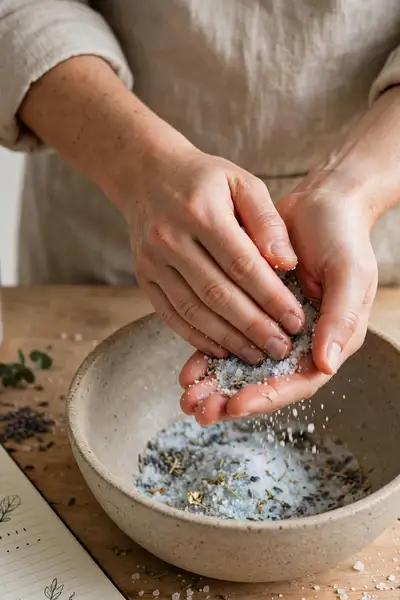
Quick Tip: Warm the carrier oil for ten seconds before drizzling. Cold oil beads on salt and hides in pockets, which is why some spoonfuls smell strong and others smell of nothing at all.
Three smaller habits separate the batches people reorder from the ones they quietly finish and forget. Grind one spoonful between your palms over the sink to test scent before jarring. Keep one plain, unscented batch always ready for sensitive guests. And rinse the bowl dry, never damp, before the next batch begins in it.
Mistakes That Ruin a Batch
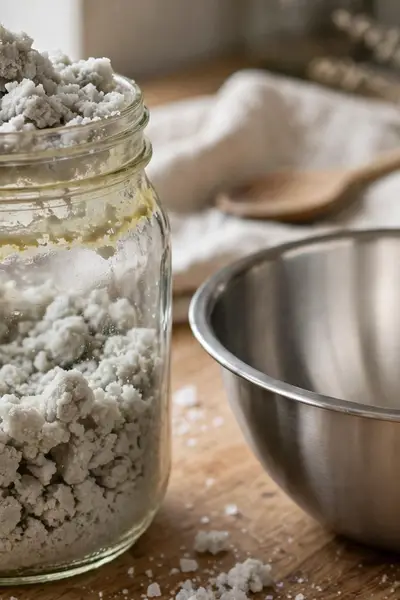
Common Mistake: Over oiling the batch. Extra oil feels luxurious in the bowl, then floats on the water, rings the tub, and turns the jar’s last third greasy and dull smelling.
The Fix: Hold the line at one tablespoon of carrier oil per base batch. If a blend smells weak, add drops of scent, never more oil, and let the rest day prove the strength before judging.
Two more mistakes ride along with that one. Wet spoons and damp bowls invite clumps, and scenting before the salts are mixed scents only the top layer. Work dry, stir first, and scent last: a boring order that quietly produces almost every good batch I have ever been given.
Troubleshooting: Gritty, Weak or Damp Salts
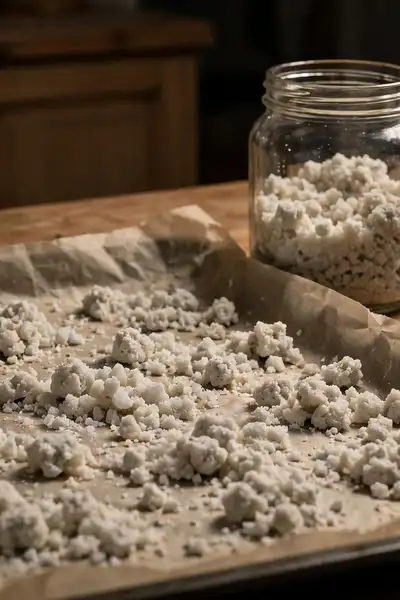
Gritty Salts: Stir longer, the soda was uneven | Weak Scent: Rest two more days before adding drops | Damp Batch: Spread on a tray overnight, then rejar | Color Faded: Store away from sunlight
Almost every failed batch is a storage or patience problem wearing a recipe costume. The salts themselves rarely go wrong; water sneaks in, sunlight eats the color, and makers judge the scent a day too early. Fix the jar and the calendar first, and change the recipe only after those two have had their chance.
How to Store Bath Salts So They Stay Dry

Before: The jar lives open on the bath edge, steam from every shower drifting in. Within two weeks the top crusts, the scent thins, and spoonfuls come out in damp lumps.
After: The jar lives sealed in a dry cupboard, opened only over the tub. Three months later the salts pour like sand and the last spoonful smells as strong as the first.
Glass beats plastic here, because glass seals tighter and never holds the ghost of an older scent. Date every jar, use the oldest first, and expect a well stored batch to stay good for about six months. After that the salts still work; only the scent retires, and fresh drops can wake it.
Frequently Asked Questions
1. How long do homemade bath salts keep?
About six months in a sealed jar in a dry cupboard. The scent retires first; the salts themselves keep working after that, and a few fresh drops can wake an older jar.
2. Can I make them without any baking soda?
Yes. The soda softens the water and calms dry skin, but the two salts carry the soak on their own. The texture turns slightly coarser, which some people prefer.
3. Why did my batch turn hard in the jar?
Moisture got in, usually from a damp spoon or a steamy shelf. Break the lump up, spread the salts on a tray overnight to dry, and rejar them in a fully dry jar.
4. Are these safe for sensitive skin?
The oil free botanical route is the gentlest choice. Patch test first, keep the water lukewarm rather than hot, and shorten the soak. Broken or irritated skin should skip scented batches entirely.
5. Can kids use them?
Plain or botanical batches, yes, in lukewarm water with a shorter soak and an adult nearby. Skip essential oil blends for young children; their skin takes scent at full strength.
6. How many baths does one batch make?
The base batch makes about three and a half cups, which is four to seven baths at half a cup to a cup each. Gift jars usually hold one cup, so one batch fills three gift jars.
Conclusion
You now hold the whole craft: a two to one base that never fails, six calm steps, scents with rules, and storage that respects your work. That is all diy bath salts ever were, a few honest ingredients treated carefully, waiting in a jar for the evening that needs them.
I’ve seen how making this one change can completely shift the result: the jar gets made, so the bath gets taken. Save this guide on Pinterest before the next long week, mix your first batch tonight, and share it with the friend who keeps saying she is tired. Her soak is ten minutes away.