22 Smart Small Office Ideas for Tight Corners at Home
You have a laptop, a deadline, and nowhere good to work. The kitchen table is taken, the bedroom has no space, and the only free spot is a corner you have been ignoring. If small office ideas keep feeling too big for your home, this guide is for you.
You will learn how to measure a tight corner, pick a desk that truly fits, and set up storage, light, and seating step by step. In my experience, most people start by buying a desk, but the corner itself should decide the desk, not the other way around. By the end, you will have a clear plan for a workspace that fits your room, your budget, and your workday.
Measure First: Find the Corner That Actually Works
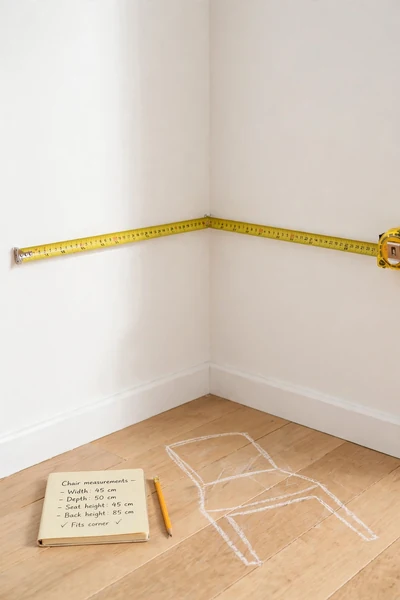
Most small office ideas skip the measuring step, and that is where the trouble starts. A desk that looks perfect online can block a walkway or leave no room for your chair. Ten minutes with a tape measure saves you from returns and a setup that never feels right.
Start with three numbers: the width of the corner, the depth you can spare, and the height to the nearest shelf or window. Then check the outlet, the light at your usual work hour, and the legroom behind the chair. Write it all down instead of guessing from memory.
Choose a Desk That Fits the Corner, Not the Room
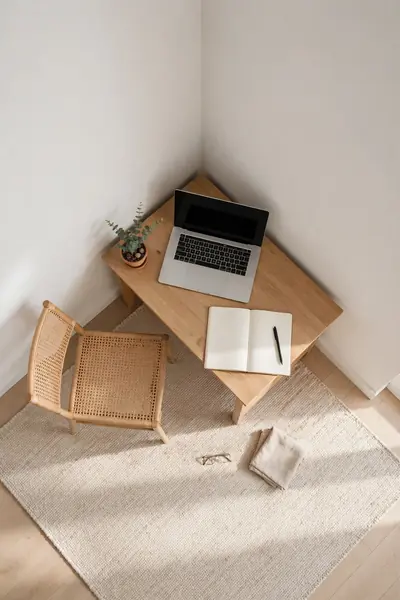
A desk that fits the room can still fail the corner. The corner has its own limits: two walls, one outlet, and a fixed amount of elbow room. Match the desk to those limits first, and the rest of the setup falls into place.
- Measure the corner width, then subtract two inches for breathing room on each side. That number is your maximum desk width.
- Keep the desk depth between 18 and 24 inches. Deeper desks push your chair into the walkway.
- Check the height: 29 to 30 inches suits most adults and most chairs. If the desk is higher, your shoulders will ache by noon.
- Confirm the outlet sits within arm’s reach of the desk. A power strip across the floor is a tripping hazard, not a plan.
Also View:20 Serene Home Office Aesthetic Ideas You’ll Truly Love
Try a Floating Desk to Keep the Floor Clear
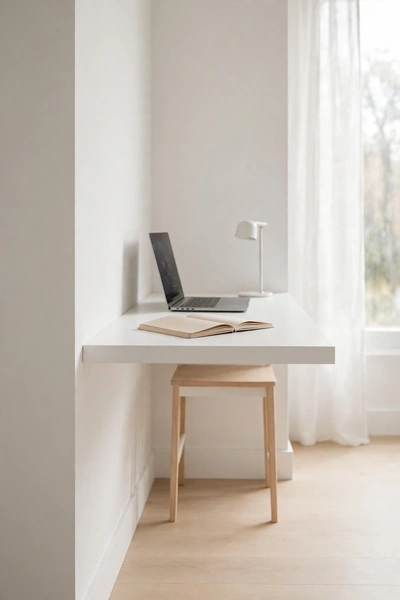
Quick Tip: A floating desk works best when it mounts into wall studs, not drywall alone. Studs carry the weight of the desk, the laptop, and your arms without sagging. A stud finder costs a few dollars and takes two minutes to use.
A floating desk is a shelf with a job. It gives you a full work surface while the floor underneath stays open, so the corner feels bigger. Pick a depth of 18 to 20 inches and a bracket rated above your laptop’s weight. Pair it with a stool that tucks fully underneath.
Fold It Away With a Wall-Mounted Drop-Down Desk
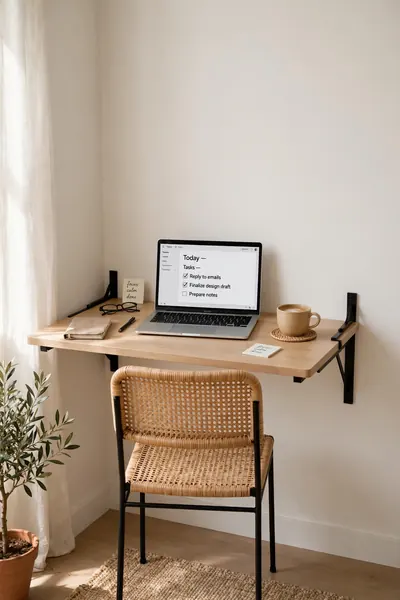
Common Mistake: Most people buy a drop-down desk that is too deep, then the open flap eats the whole walkway. A 24-inch flap in a narrow corner leaves no room to pull up a chair.
The Fix: Choose a flap depth of 16 to 18 inches for narrow corners, and test it before you mount anything. Mark the open flap on the floor with tape and sit in front of it. If your knees clear it and the chair fits, the size is right.
A drop-down desk is the best friend of a shared room. It works as a full desk during work hours, then folds flat against the wall for dinner, guests, or playtime. Add a small magnetic strip or hook inside the flap for pens and notes, so nothing gets lost between folds.
Tuck a Corner Desk Into an L-Shaped Nook

What You Need:
- An L-shaped or corner desk that matches your corner measurements.
- A chair with a low back that slides fully under the desk.
- A task lamp for the side that gets less window light.
- A small tray or drawer for pens, chargers, and sticky notes.
- A power strip mounted to the desk leg to keep cords off the floor.
An L-shaped desk turns a dead corner into two work zones: one side for the laptop, one side for writing or paperwork. The corner itself becomes storage for the few things you reach for daily. Keep the main work side clear, and the nook stays calm instead of crowded.
Use a Slim Console Table as a Work Surface
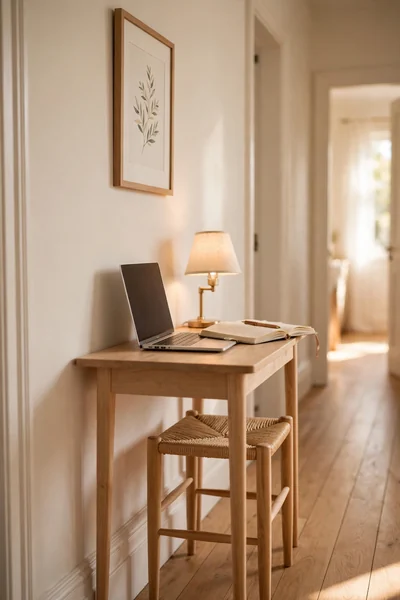
Before: The hallway table held keys, mail, and a bowl nobody used. The hallway itself was a pass-through, not a place anyone sat down to work.
After: The same table holds a laptop, a lamp, and a notebook, and the hallway corner earns its keep. A stool slides underneath when the workday ends, and the hallway looks like a hallway again.
A console table works because it is narrow by design, usually 12 to 16 inches deep. That slim depth leaves the walkway open while still holding a laptop and a notebook. Check that the table is sturdy and level, since a wobbly console makes typing miserable.
Roll In a Cart Desk You Can Park Anywhere
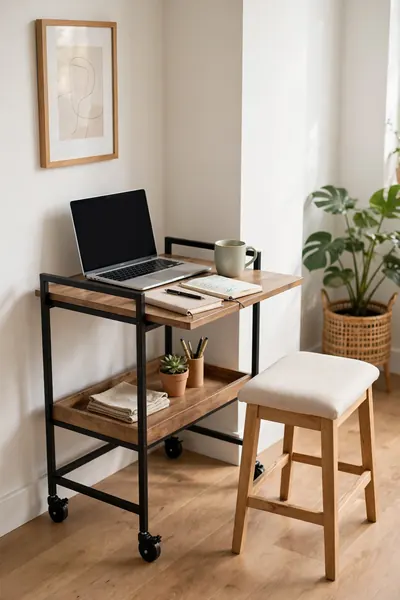
Do This:
- Lock the wheels before you start typing.
- Keep the top shelf for the laptop and the lower shelf for notebooks.
- Park the cart facing a wall outlet to keep the cord short.
- Roll it back to its corner spot when the workday ends.
Avoid This:
- Do not pile books on the top shelf until the cart tips.
- Do not run the charger cord across a walkway.
- Do not use a cart with wobbly wheels on a hard floor.
A cart desk suits anyone who shares a room or moves between spaces. It works as a full desk while you need it, then rolls aside for meals, guests, or floor space. Choose a cart with a flat top, solid wheels, and a weight rating above your laptop, and it will serve you for years.
Pick a Chair That Slides Fully Under the Desk

Time Needed: 10 minutes | Difficulty: Easy
Cost: Low | Best For: Tiny corners and shared rooms
The chair matters more than most people think. A bulky chair with arms eats the corner even when you are not sitting in it. A slim armless chair slides fully under the desk, so the corner looks clear. Test the slide before you buy, because two stuck inches ruin the whole trick.
Go Vertical With Shelves Above the Desk

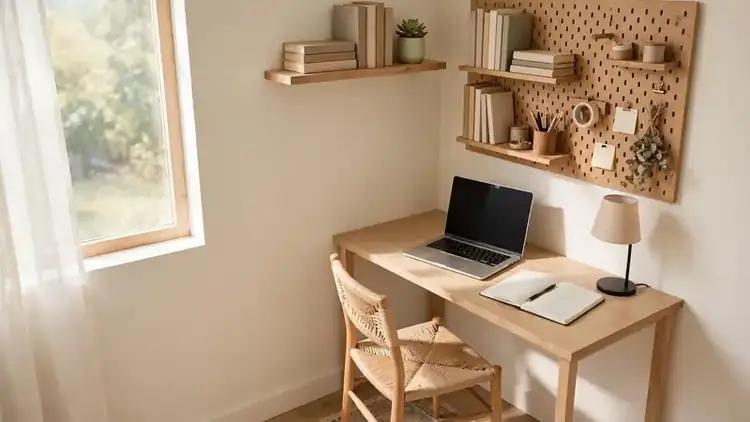
The wall above your desk is free storage waiting to happen. One or two shelves hold books, chargers, notebooks, and a plant without touching a single inch of floor. In a tight corner, going up is often the only direction left that is truly free.
Mount the first shelf at eye level so daily items stay within reach, and the second shelf higher for weekly things. Keep heavy books on the lower shelf and light baskets up top. Leave one small gap on each shelf, and the wall stays calm instead of crowded.
Hang a Pegboard for Tools and Supplies

A pegboard turns a blank wall into storage that you can rearrange in minutes. Hooks hold tools, baskets hold supplies, and everything stays visible at a glance. When a tool has a visible home, it gets put back instead of piling up on the desk.
- Mount the pegboard into wall studs or use anchors rated for the full load. A loaded pegboard is heavier than it looks.
- Hang daily tools at arm’s reach and weekly items higher up. If you stretch for it every day, it is in the wrong spot.
- Use baskets for small items like pens, cables, and sticky notes. Loose hooks drop small things onto the desk.
- Leave one empty row at the bottom for new tools. A full board with no room to grow turns into clutter fast.
Add a Single Shelf for Daily Essentials

Quick Tip: One shelf beats three shelves when the corner is truly tiny. A single shelf forces you to keep only what you use every day. Everything else belongs in a drawer or a closet.
The shelf holds your mug, your notebook, and one small plant, and nothing else. That limit is the point: the shelf stays useful because it never becomes extra storage. Mount it at eye level, keep it dusted weekly, and let it do one quiet job.
Hide Clutter in a Rolling Drawer Unit
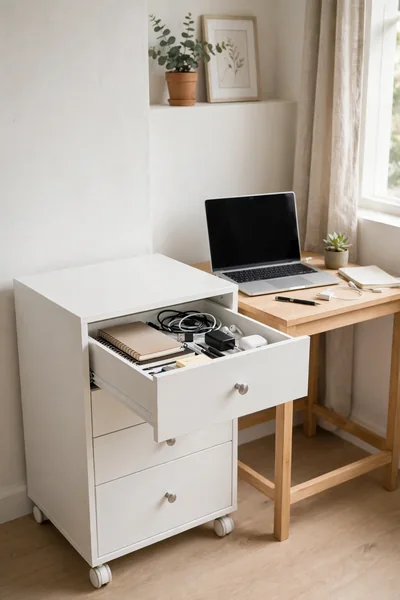
Common Mistake: Most people buy a drawer unit, fill it once, and never open it again. Within a month it becomes a junk drawer on wheels, and the clutter creeps back onto the desk.
The Fix: Give every drawer one job and label it. Top drawer for daily tools, middle for chargers and cables, bottom for papers. When a drawer has a job, clutter has nowhere to hide.
A rolling drawer unit works because it moves with you and disappears when you need floor space. Roll it beside the desk during work, then tuck it under the desk or into a closet corner at night. Empty it once a month, and it will stay a tool instead of a junk drawer.
Light It Right With a Clip-On Task Lamp
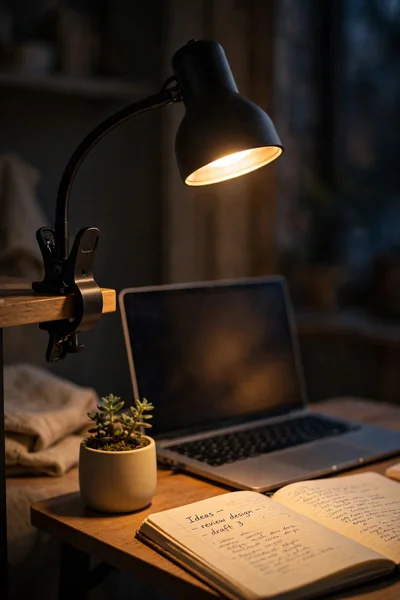
What You Need:
- A clip-on lamp with an adjustable arm and a warm bulb.
- A shelf, desk edge, or pegboard to clip it onto.
- A short cord and a cable clip to keep the cord tidy.
- A dimmer or smart bulb if you work late at night.
Good light changes how a corner feels and how long you can work in it. A clip lamp puts light exactly where you need it without taking desk space or floor space. Aim it at the work surface, not at your eyes, or the glare will tire you out fast.
Brighten the Corner With an LED Strip

Before: The corner went dark by late afternoon, and the ceiling light left a shadow right over the desk. Work ended early, or moved to the couch.
After: A warm LED strip under the shelf washes the desk in even light. The corner stays usable after sunset, and the whole nook looks calm and finished.
An LED strip is the cheapest lighting upgrade for a dark corner. Stick it under a shelf or along the back edge of the desk, and hide the cord behind the leg. Pick warm white, not cool blue, so the corner feels like home instead of an office cubicle.
Use a Mirror to Double the Light and Space
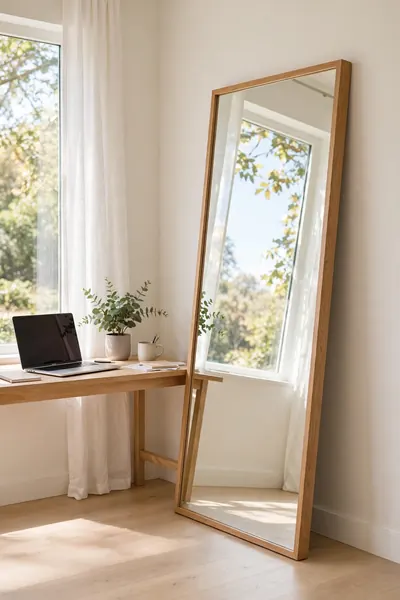
Do This:
- Lean a tall mirror against the wall opposite the window.
- Angle it so it bounces light toward the desk, not into your eyes.
- Pick a slim frame that matches the desk finish.
- Clean it weekly so the reflection stays bright.
Avoid This:
- Do not hang a mirror where it reflects a messy wall.
- Do not place it where your screen reflects in it.
- Do not choose a heavy mirror that needs risky wall anchors.
A mirror is the oldest small-space trick, and it still works. It bounces daylight into the corner and doubles what the eye sees, so the nook feels twice as big. Keep the frame slim and the glass clean, and the corner gains light without gaining a single new object.
Also Explore:21 Enchanting Cozy Reading Nook Ideas for Book Lovers
Anchor the Zone With a Small Rug

Time Needed: 5 minutes | Difficulty: Easy
Cost: Low | Best For: Open-plan rooms and shared spaces
A rug tells your brain where work starts and ends. Without one, the desk corner bleeds into the rest of the room and focus slips away. Pick a rug just big enough for the chair and desk legs, with a flat weave the chair rolls over easily.
Tame Cords With One Simple Cable Plan

Cables are the fastest way to turn a tidy corner into a mess. One charger, one lamp cord, and one speaker cable can tangle into a nest behind the desk within a week. The fix is not more storage, it is a plan made once.
Run every cord along the same path, clip it to the desk leg, and plug everything into one power strip under the desk. Label the strip with tape to find the right plug fast. Ten minutes of work buys you a corner that stays neat for months.
Add One Plant for Calm and Cleaner Air

One plant does more for a small office than a shelf of decor. It softens hard edges, adds life to the corner, and gives your eyes a rest from the screen. The trick is picking one that survives low light and irregular watering.
- Pick a pothos, snake plant, or ZZ plant. All three handle low light and missed waterings.
- Place it where it gets indirect light, not direct sun. Direct sun scorches leaves on a small desk.
- Water only when the top inch of soil feels dry. Most indoor plants die from too much water, not too little.
- Keep it to one plant in a small corner. Two or three turn a workspace into a greenhouse.
Divide the Space Without Building a Wall
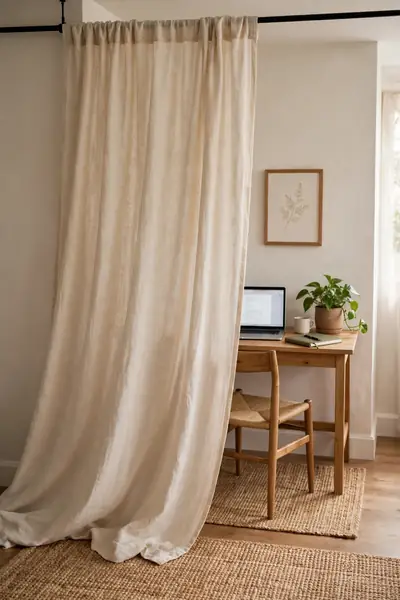
Quick Tip: A curtain beats a bookcase divider in a rental. It needs one ceiling track or tension rod, leaves no holes in the wall, and opens or closes in one pull.
A divider tells everyone, including you, that work has started. It hides the desk from the living area and hides the living area from video calls. A curtain, a folding screen, or a low bookcase all do the job. Pick the one that fits your space and your landlord’s rules.
Style It With a Small Mood Board

Common Mistake: Most mood boards become clutter walls. Every photo, ticket, and note stays up forever until the board looks like a junk drawer standing upright.
The Fix: Limit the board to nine items and rotate them monthly. Keep one goal, one photo that makes you smile, and one useful note. Everything else comes down.
A mood board works when it shows who you are, not everything you own. It makes the corner feel personal, which makes you want to sit down and work. Swap a few pins each month, and the board keeps working instead of turning into wallpaper.
Mistakes That Make a Small Office Feel Smaller
Do This:
- Measure the corner before you buy anything.
- Keep the desktop clear except for the laptop and one notebook.
- Let daylight and one lamp do the lighting work.
- Empty the drawers once a month.
Avoid This:
- Do not buy a desk deeper than the corner allows.
- Do not add a second chair or a filing cabinet to a tiny nook.
- Do not let cables pile behind the desk.
- Do not cover every wall with shelves and boards.
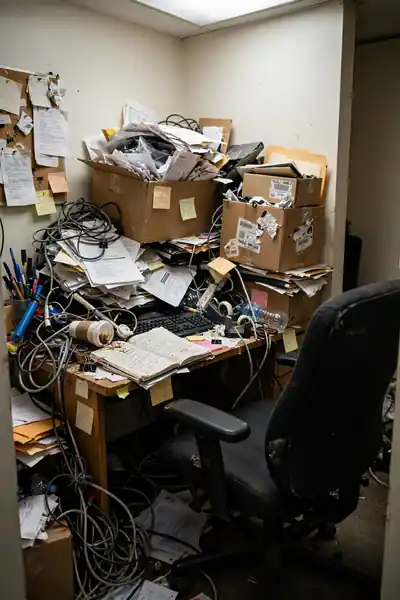
Most small offices fail from too much, not too little. Too much furniture, too many supplies, and too much decor crowd a corner until it feels like a closet instead of an office. The fix is almost always subtraction: remove one thing, or the corner stays a closet.
Frequently Asked Questions
1. How much space do I need for a small corner office?
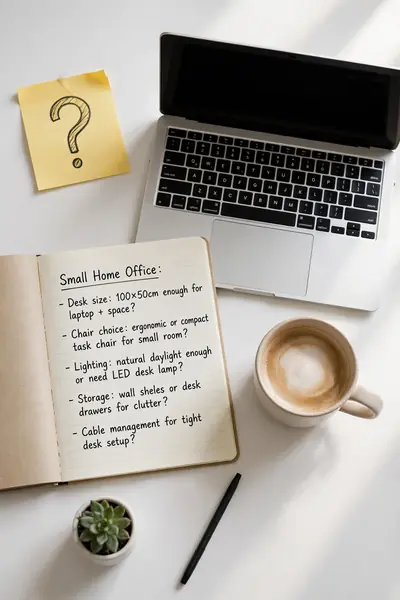
A corner about 3 feet wide and 2 feet deep fits a laptop desk and a slim chair. Measure your corner first, then match the desk to those numbers.
2. What is the best desk for a really tiny corner?
A floating desk or a fold-down desk works best, because both free the floor when you are not working. A cart desk is the best pick if you need to move it between rooms.
3. Can I set up an office in a rental without drilling?
Yes. Use a console table, a cart desk, a tension-rod curtain, and clip lamps. All of them set up without a single hole in the wall.
4. How do I keep a small office from looking cluttered?
Keep the desktop clear except for the laptop and one notebook, give every drawer one job, and empty the drawers once a month. Less on show means less mess.
5. What should I spend on first?
Spend on the chair and the light first. A chair that fits and a lamp that lights the desk change how the corner feels more than any decor.
Conclusion
You now have 22 ways to turn a tight corner into a workspace that fits your life. Start with the measuring step, pick one desk idea, and let storage and light follow. These small office ideas work because they fit the corner you already have, not a room you wish you had.
I have seen how making this one change can completely shift the result. Save this guide on Pinterest before you start, try one idea in your own corner this week, and share it with someone who is still working from the couch. Your corner is ready. It just needs you to claim it.