Easy Lavender Soap Recipe for Calm Relaxing Showers
The shower at the end of a long day should give something back, and most days it gives you ten rushed minutes and yesterday’s stress. This lavender soap recipe changes the smallest part of that ritual, the bar in your hand, and quietly changes everything that follows it.
You need no lye, no special skill and no free weekend: one pound of melt and pour base, real lavender oil, and about thirty minutes of gentle work. By tonight there can be four calm bars cooling on your counter, ready for the shower you actually look forward to.
Why Lavender Belongs in Your Shower

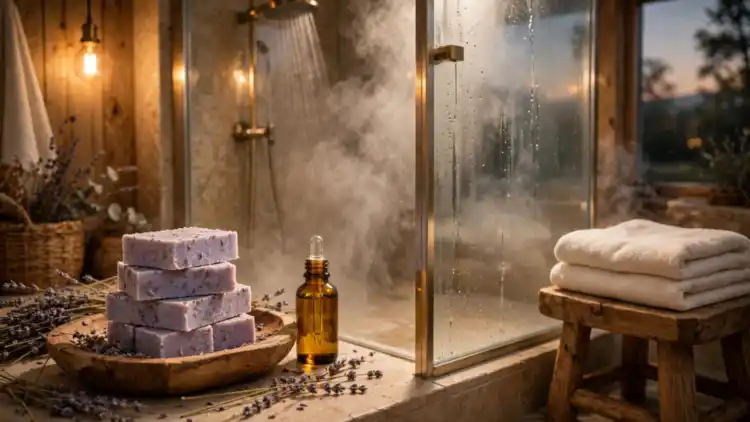
Some scents wake you up, and a few rare ones do the opposite on purpose. Lavender has been the evening herb for centuries because its smell tells the nervous system the day is finished, and a warm shower carries that scent straight into the steam around you.
In the bar itself, the buds and oil do quieter work than the perfume. Lavender is gentle on skin that reacts to strong fragrance, it suits faces and bodies alike, and one bar by the tub turns an ordinary rinse into the calmest ten minutes of the day.
What You Need: Base, Buds, Oil and a Mold

Everything for one batch fits on a single tray:
- One pound of goat milk or shea melt and pour base, the gentle foundations that need no lye handling at home.
- One teaspoon of pure lavender essential oil, measured honestly, because this is the whole scent of the bar.
- One tablespoon of dried culinary lavender buds, dry to the touch, for the tops and a few through the bar.
- A silicone mold with four cavities of about four ounces each, so every bar sets the same size.
- Optional: a pinch of purple mica for color, plus a heat safe jug, a spatula and a kitchen scale.
Buy the base and oil once and they cover several batches, so the first bars cost the most and every batch after feels almost free. Keep the buds sealed and dry between batches, because damp buds brown inside finished soap and spoil the look completely.
Also View: Moisturizing Oatmeal Honey Soap for Dry Winter Skin
What This Batch Makes: Amounts and Yield
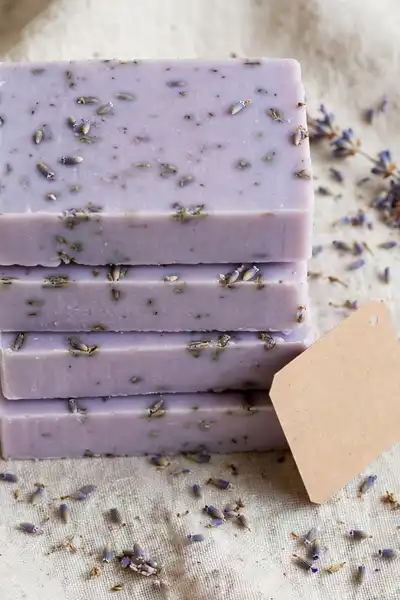
Weigh the base instead of trusting the package line, because molds forgive almost everything except a batch that comes up short. One pound fills four standard cavities neatly, and a half pound test batch is the smartest way to trial a new scent strength.
Expect four bars of about four ounces each, roughly thirty minutes of hands on work, and two to four hours of setting before the first unmolding. Wrapped and kept dry, the bars hold their scent for about six months, so one afternoon covers half a year of calm showers.
Set Up First: The Ten Minute Prep
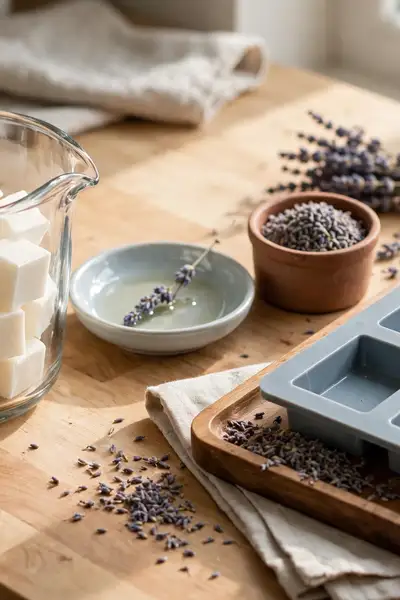
Most spoiled batches are lost before the base ever melts: the mold is still in a cupboard, the buds are in an unopened bag across the kitchen, and the melted base sits cooling and skinning over while its maker hunts for a spatula.
Lay everything out first, in the order it will be used: cubes cut, oil measured into a small dish, buds in a ramekin, mold on a flat tray that can move. Ten quiet minutes of setup buys a calm pour with no pauses in the middle.
Soap making rewards the same habit as baking: read the recipe twice, set out the parts once, and the work itself becomes the relaxing part. Your future self, holding a jug of perfectly melted base, will be grateful for every second of this prep.
Cut and Melt the Base Gently
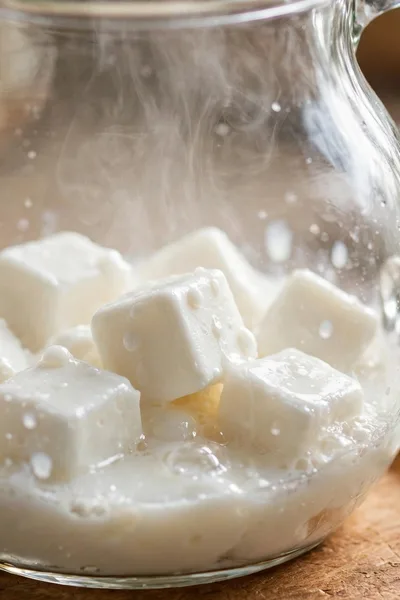
Melt and pour base forgives almost everything except impatience and a rolling boil. Melted gently, it pours like warm honey and sets glassy smooth; boiled, it turns foamy, loses moisture, and gives you a bar that sweats and shrinks in the mold.
- Cut the pound of base into small even cubes, about an inch each, so they melt at the same speed.
- Fill the heat safe jug with the cubes and microwave in 30 second bursts, stirring gently between each one.
- Stop while a few small lumps remain and stir slowly until they melt into the rest from the jug’s own heat.
- No microwave? Use a double boiler on low, and lift the jug off the moment the last cube disappears.
Cool Slightly, Then Add the Lavender Oil
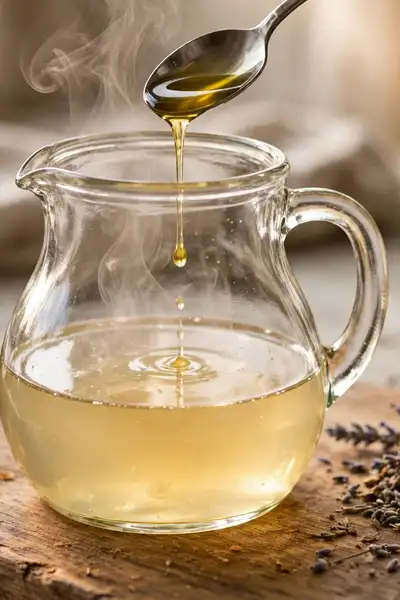
Stirred into base that is still steaming hot, lavender oil does the saddest trick in soap making: its lightest scent notes flash off into the kitchen air, and the finished bar smells faintly of warm wax with a rumor of flowers.
Given five to ten minutes to cool until the base feels hot but comfortable on the jug’s side, the same oil stays where it belongs. The scent folds into the base evenly, and the bar perfumes the whole shower weeks later.
A skin forms the moment the base is ready, and that skin is your signal: stir it back in, add the oil, and stir slowly for a full thirty seconds. Slow stirring now is the difference between a scented bar and a merely purple one.
Color and Buds: Two Ways to Add Them
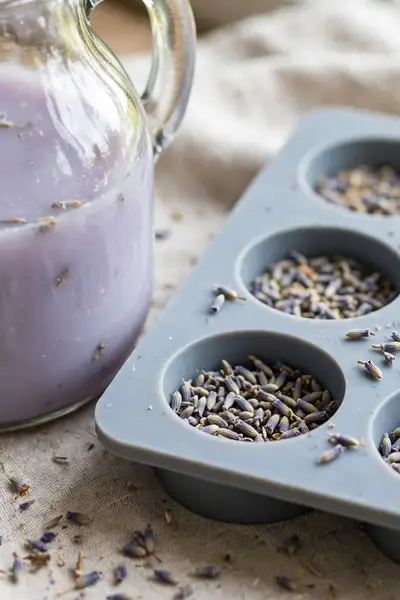
Two small decisions give this bar its face. Choices that keep the bars beautiful:
- Stir the mica into the cooled base a pinch at a time until the purple stays pale and cloudy.
- Press a few buds into the mold first when you want a decorated top with a smooth finish.
- Sprinkle buds over the poured bar within the first minute, while the surface is still soft.
Choices that quietly ruin them:
- Dumping in enough mica for a deep violet, which stains washcloths and tub edges.
- Mixing handfuls of buds through the whole bar, where they turn brown and feel scratchy.
- Adding buds to base that is already setting, so every bud sits loose and sheds.
Think of the buds as embroidery, not stuffing: a little placed with intention reads as craft, and a lot scattered in hope reads as salad. The prettiest bars I have unmolded carried fewer than a dozen buds each, every one placed on purpose by hand.
Pour, Top and Clear the Bubbles
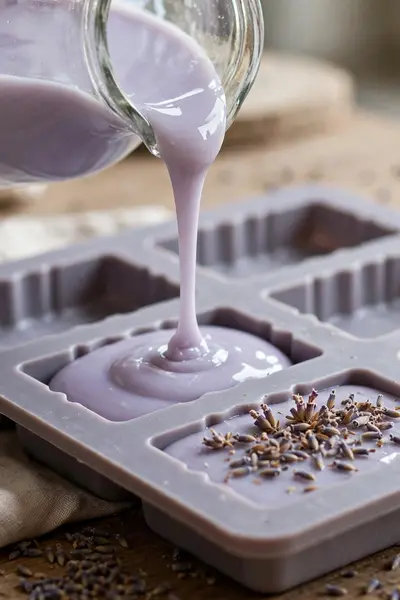
Pour low and slow to keep air out.
Work within five minutes of adding the oil.
A toothpick burst beats a shaken mold.
Tap the mold twice, never ten times.
Pour along the side of each cavity rather than from a height, and the base slides in like water instead of trapping pockets of air. Finish one cavity completely before moving on, because a half finished row cools unevenly and shows every pause as a line.
Set, Unmold and the First Shower
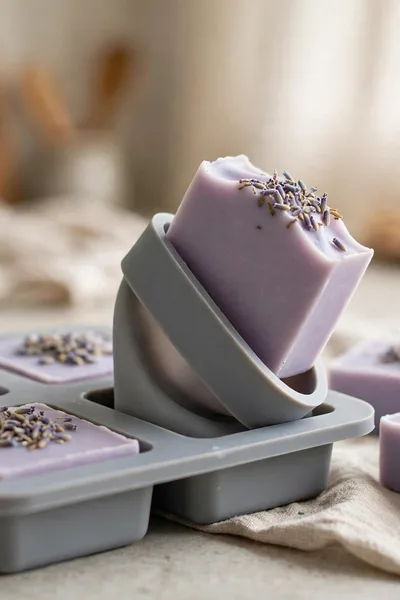
Leave the mold completely alone on a level surface for two to four hours, because warm soap records every nudge as a wrinkle. When the tops feel firm and cool all the way across, the bars are ready to meet your hands for the first time.
Flex the silicone gently and each bar releases with a soft pop, smooth sided and faintly glossy. The first shower is the real test: the lather comes up creamy, the buds stay put, and the steam lifts the lavender into the whole room within a minute.
Making the Scent Calm, Not Perfumey

This lavender soap recipe is built for the last ten minutes of the day, not for announcing itself down the hallway. Scent strength is a dial, not a trophy, and lavender turns sharp and medicinal the moment a maker pours with a heavy hand.
- Start at half a teaspoon of oil per pound of base when the bars are for your own evening shower.
- Test one bar in a real shower before judging, because steam doubles what a dry sniff promises.
- Raise the dose by quarter teaspoons in the next batch only, and write the amount on the batch label.
- Pair lavender with one soft partner, a few drops of vanilla or cedarwood, when a batch still feels one note.
Tips From Many Lavender Batches
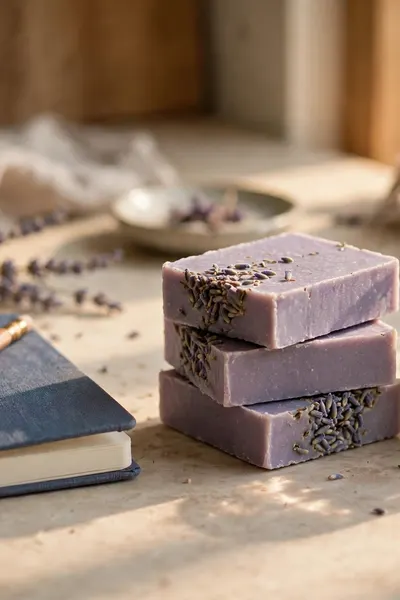
Freeze the finished bars for twenty minutes before unmolding on humid days. The cold firms the edges just enough that corners come out crisp instead of thumb marked, and the bars slide free without the wrestling that bends warm soap out of shape.
Keep a tiny notebook with each batch: base brand, oil amount, room temperature, and one honest sentence about the result. Three batches of notes teach more than thirty videos, because your kitchen, your water and your nose are the judges that actually matter here in the end.
Mistakes That Weaken Scent or Spoil Bars
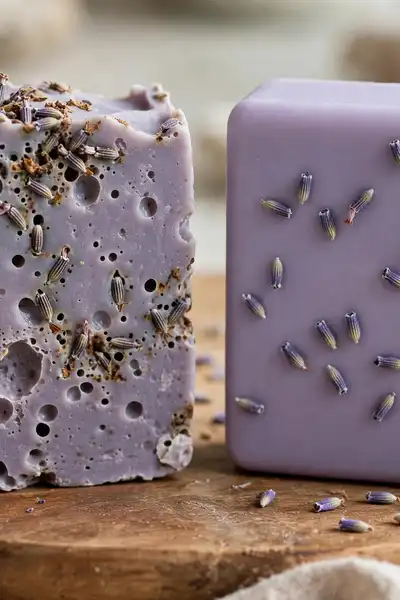
The batch killers are boringly consistent: oil stirred into boiling base, buds that went in damp, and a mold filled so fast that air pockets hide inside the bars. Each one is invisible on the day and obvious at the first shower.
Respect three pauses and most batches survive: cool the base before the oil, dry the buds before they touch soap, and pour slowly enough to watch the level rise. None of these costs a cent; all three together cost about four extra minutes.
I’ve noticed that beginners blame the recipe when a batch fails, and the recipe is almost never the problem. Temperature, timing and damp buds explain nearly every disappointment, which is good news, because all three sit completely within your control next time you make it.
Troubleshooting: Sweating Bars, Faded Color, Soft Spots
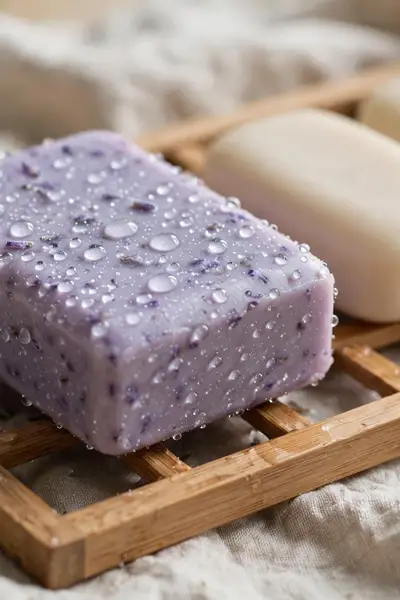
When a batch misbehaves, match the symptom before touching anything:
- Bars sweating beads of moisture: this is glycerin dew, not spoiled soap; blot the bars, wrap them, and store them away from steamy air.
- Color faded to greyish lilac: the base was likely too hot for the mica; add color later as the base cools, and keep bars out of sunny windows.
- Soft or bendy bars after a day: they were unmolded too early or the base boiled off its firmness; give them three open air days on a rack.
- Scent strong in the bar, weak in the shower: the oil dose is fine but the bar is young; rest it a week and the lather will carry more fragrance.
- Buds shedding from the tops: they were added after the surface skinned; next batch, sprinkle within the first minute or press them into the mold first.
Nearly every melt and pour problem is cosmetic rather than dangerous, which makes this the kindest craft to learn by trial. Fix the storage, adjust one variable, and run the next batch before the lesson fades, because small corrections compound faster than perfect plans ever do.
Variations: Milk and Honey, Lemon Lavender, Plain White
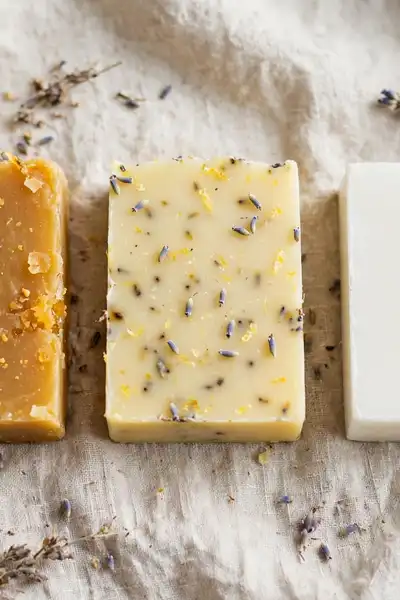
The base recipe is a doorway, not a destination. Stir a teaspoon of honey and a splash of extra milk base into the pound for the milk and honey bar, and the lather turns silkier while the scent rounds into something warm and edible smelling.
Lemon lavender splits the same oil dose between the two scents and suits morning showers better than midnight ones. Plain white skips color and buds entirely, keeps the full lavender dose, and looks like the expensive minimalist bars in boutique windows, especially wrapped in plain paper.
Also Explore: Soothing Aloe Cucumber Soap Recipe for Sensitive Skin
Storing Bars and Gifting Them Calmly
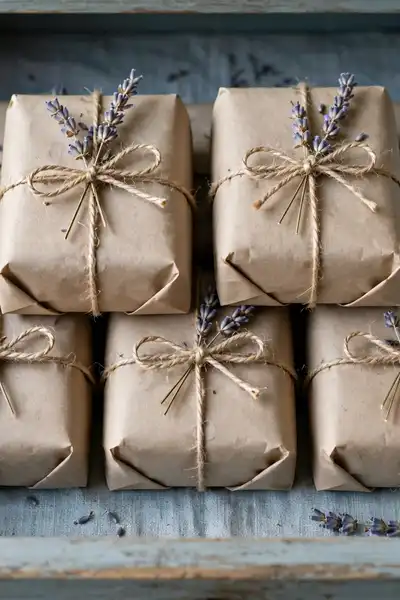
Storage decides whether month three smells like week one. Habits that protect the bars:
- Wrap each cooled bar tightly in plastic wrap or a small sealed bag within a day of unmolding.
- Keep wrapped bars in a cool dark drawer, standing on edge with air between them.
- Add one spare bud sprig inside gift wrapping the day it is given, not the week before.
Habits that quietly waste them:
- Leaving bars unwrapped in the bathroom, where steam feeds on the scent daily.
- Storing bars against strongly scented candles or spices that lend them foreign smells.
- Stacking fresh bars under heavy objects while they are still firming up.
A bar given in plain kraft paper with a single sprig tied on top looks like it came from a small French market, and it costs almost nothing to dress. Handmade soap fails as a gift only when it arrives smelling tired, and storage prevents exactly that.
Frequently Asked Questions
1. Can I make this soap without a microwave?
Yes, a double boiler on the lowest heat melts the base just as gently. Keep the water at a bare simmer, lift the jug off as soon as the last cube melts, and never let the base boil.
2. How long do the bars need before I can use one?
Melt and pour soap can be used the day it sets, usually after two to four hours in the mold. Letting bars rest a few days wrapped makes them feel firmer, but no long cure is required.
3. Why did my lavender buds turn brown?
Buds brown when they go into the soap damp or the base is very hot. Use fully dry buds, add most of them to the tops rather than through the bar, and they will keep their color far longer.
4. Can I use fresh lavender from the garden?
Fresh flowers carry water, and water inside soap invites spoilage and brown spots. Dry the flowers first for about a week in a dark airy place, and they will behave exactly like bought buds.
5. Is this soap gentle enough for faces?
For most people, yes, especially with a goat milk or shea base and the calmer oil dose from this recipe. Anyone with reactive skin should test one bar on the inner arm first for two days.
6. How do I stop bars sweating in a humid bathroom?
Keep daily bars on a draining dish so they dry between showers, and store the spares wrapped outside the bathroom. The sweating is glycerin drawing moisture from the air, and dry storage ends it.
Conclusion
You now hold a simple skill that pays you back every single evening: a bar you made, scented exactly to your own calm. Start with one batch of this lavender soap recipe this week, keep the oil gentle, and let the first shower judge the result. Save this post on Pinterest so the amounts stay beside you at the counter, and share it with a friend whose evenings need softening. I’ve seen how making this one change can completely shift the result, turning a daily rinse into the quietest, kindest ten minutes of the day.