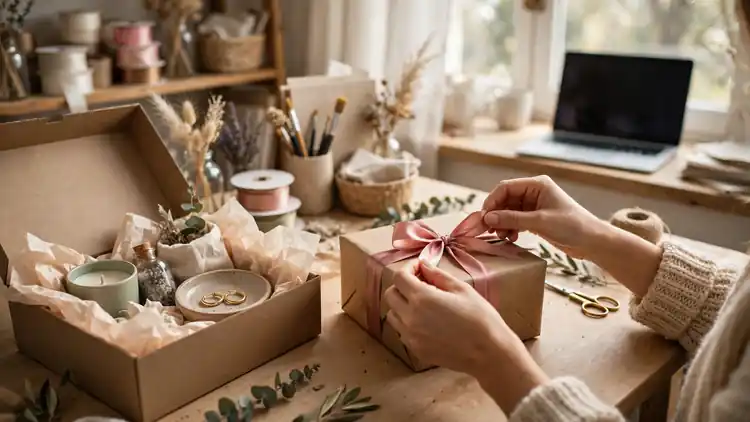
How to Start a Gift Box Business From Your Kitchen
Your kitchen table already holds everything this business needs to begin. I’ve noticed the women who succeed do not wait for a shop or a loan; they start gift box business projects with one niche, one sample box, and twenty boxes worth of stock.
This guide walks the whole road: choosing the niche, the legal basics, real startup costs, suppliers, pricing that actually profits, your first ten sales, corporate orders, shipping, and the seasonal calendar that runs the year.
By the end, you will know exactly what to buy first, what to skip, and how your first box gets sold.
What a Gift Box Business Really Is

A gift box business sells ready made boxes of chosen items for people who want to give something thoughtful without shopping for hours. You pick a theme, gather the pieces, pack them beautifully, and sell the finished box for more than the parts cost.
It comes in three shapes: ready made boxes listed and waiting, custom boxes built to one buyer’s request, and subscription boxes sent monthly. The women who start gift box business projects at home usually begin with ready made boxes, because they can be packed ahead and sold the same week.
Why Gift Boxes Sell All Year Round
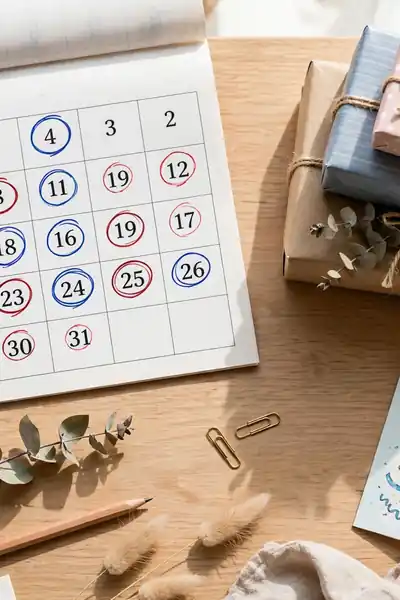
Flowers wilt and gift cards feel lazy, so buyers keep paying for boxes that look thoughtful and arrive ready to hand over. Demand never fully sleeps, because somebody is always being born, married, promoted, thanked, or cheered up somewhere. Every single month carries its own fresh reasons to give.
- Count the occasions in one ordinary month: birthdays, new babies, housewarmings, thank you moments, and get well wishes.
- Add the business side: offices order for staff and clients at holidays, launches, and milestones all year.
- Note the quiet months still sell sympathy, encouragement, and just because boxes to loyal repeat buyers.
- Plan your themes around this calendar, and your boxes always meet a reason that already exists.
Also View: How to Sell Candles on Etsy and Get Your First Order
Pick One Niche Before You Buy Anything
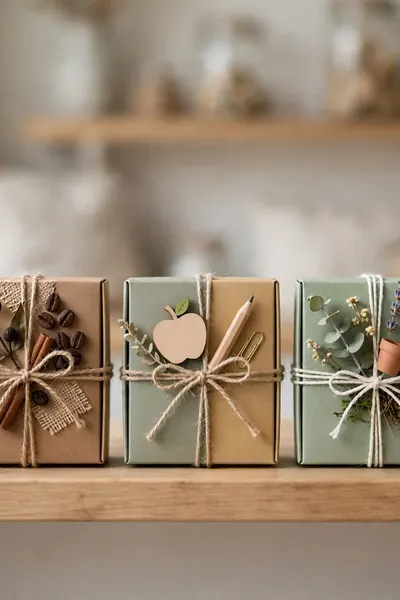
Quick Tip: Choose the niche you already understand as a buyer. If you have sent three new baby gifts this year, you already know what mothers keep, what gets returned, and what a fair price feels like. That lived knowledge beats weeks of guessing.
Strong niches include new baby, sympathy and encouragement, coffee or tea lovers, teachers, and self care for busy women. Judge each one by three things: how often people buy it, what they happily pay, and how easily the products ship without breaking. One niche, chosen well, is a business. Five is a cupboard of unsold stock.
Research That Fits on One Notebook Page

Common Mistake: Copying the best selling box item for item. You learn nothing about why it sells, and your version arrives late with no reason to exist. Research copied is just stock you cannot explain.
The Fix: Study ten rival boxes and write down three things: the price buyers already accept, the item reviewers praise most, and the complaint that keeps repeating. Build your box to answer that complaint, and your research turns into a selling point.
One notebook page holds the whole study: five rival prices, three praised items, three repeated complaints, and the occasions each box targets. I’ve noticed that most people skip this step because buying stock feels more productive, yet this single page decides what is worth buying at all.
The Kitchen Setup: Workspace and Storage in a Small Home
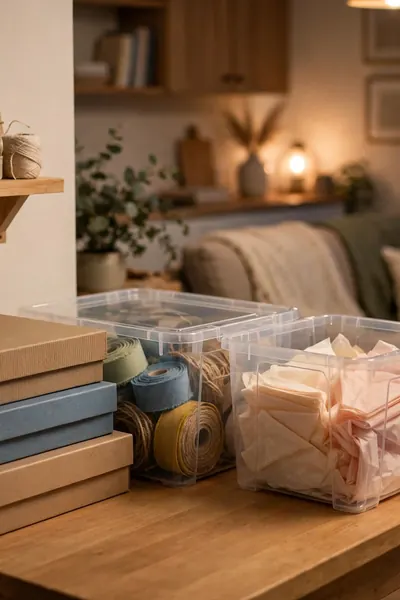
What You Need:
- One clear work surface: the end of the kitchen table or a folding table that holds a box, filler, and ribbon at once.
- Vertical storage: one shelf or stacked clear bins, so stock lives upward, not across the room.
- A packing kit basket: scissors, tape, twine, cards, and tags kept together so setup takes two minutes.
- Flat box storage: unbuilt boxes slide under a bed or stand in a wardrobe, taking almost no space.
- A photo spot: one cleared corner near a window, reserved for listing photos on bright mornings.
Pack up should take ten minutes: bins lidded, kit basket on the shelf, boxes flat, table wiped back to family use. A setup that disappears kindly gets welcomed back tomorrow, and that welcome matters more than square footage in a home run business at this scale.
The Legal Basics: Name, License, and Food Rules
Before: Sales start as cash between friends, no name registered, no records, and no idea whether food items are even allowed. The first bulk inquiry or tax question lands with nothing in place, and panic replaces planning.
After: The business name is registered, the basic local license is filed, sales tax is collected where required, and every sale sits in a simple record. Questions from buyers, markets, or offices get calm, documented answers.
Rules differ by state and city, so check your local small business office or its website before the first sale, especially for food: many places require a cottage food permit or bar edible items from home kitchens. One afternoon of paperwork protects every box after it.
What It Really Costs to Start

Do This:
- Budget in groups: boxes and filler, ribbon and cards, starter stock, and one small tool kit.
- Start with one niche and ten to twenty boxes worth of stock, not a full range.
- Keep postage and fees inside the budget from day one, not as a surprise later.
- Hold a small reserve for the box that sells out faster than expected.
Avoid This:
- Spending the whole budget on stock before a single box is photographed or listed.
- Buying premium ribbon in five colors when one color photographs beautifully.
- Forgetting your own time, which quietly eats the profit of every underpriced box.
- Borrowing for stock; this business grows safely from sales, not from debt.
A lean first month often lands between 150 and 400 dollars, depending on your niche and what your kitchen already holds. In my experience, the sellers who last are not the ones who spent most at the start, but the ones who knew exactly where each dollar went.
Finding Suppliers Without Buying in Bulk
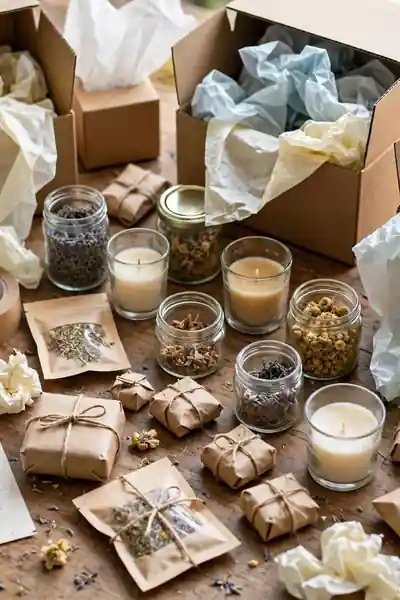
Supplier Types: Wholesale sites, local makers, craft wholesalers | First Order: Samples and singles | Minimums: Often 6 to 12 pieces | Pro Tip: Two suppliers per key item
Wholesale marketplaces sell small case packs, local makers often welcome steady small orders, and craft suppliers run sales worth waiting for. Order samples first, photograph them, and test how they pack and ship before buying depth. A supplier who answers messages quickly is worth a slightly higher price.
Choosing Products That Feel Chosen, Not Stuffed

A good box feels like one decision, not a shopping trip. Pick a clear simple theme, choose one hero item worth half the box’s value, then add three to five supporting pieces that echo the theme in scent, color, or use.
Sizes matter as much as items. A tall bottle beside flat packets looks careless; pieces of varied heights, arranged by size, look composed. Leave air out and rattling room out too: a box packed snug feels generous, while a half empty box feels like a mistake at any price.
Packaging That Makes the Box Feel Expensive

Buyers judge the box before they judge a single item inside it. Packaging is the silence before the reveal: the weight of the box, the rustle of filler, the card on top. Get this layer right and ordinary products feel like a boutique purchase.
- Choose one sturdy box size for your first range, deep enough for filler plus your tallest item.
- Line with tissue, add shredded filler until items sit half buried, never rattling loose.
- Place the card last, on top, handwritten with the buyer’s name or the occasion.
- Close, ribbon, and finish with one simple branded sticker or tag on the lid.
Build Your First Sample Box, Step by Step
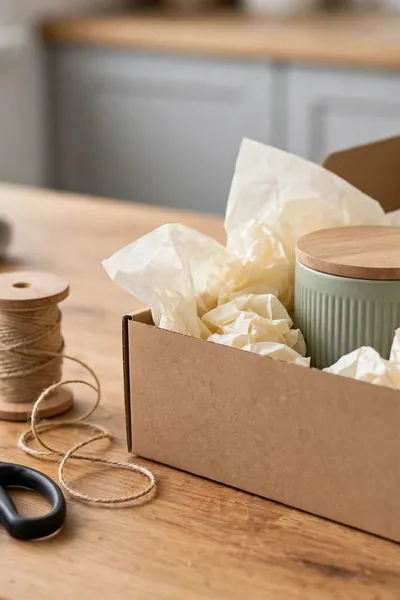
Quick Tip: Build the sample exactly as a paying buyer’s box, not a rough draft. Every shortcut you take now hides a problem you will meet at your tenth order, when there is no time left to fix it calmly.
Work in this order: box lined, filler in, hero item centered, supporting pieces by height, tissue folded over, card on top, lid closed, ribbon tied. Photograph the sample before the ribbon, after it, and in someone’s hands. This one box becomes your listing, your practice run, and your standard.
Pricing Each Box So You Actually Profit

Common Mistake: Pricing by what feels friendly. Beginners add the product costs, glance at a rival’s price, and pick something lower to feel safe. Fees, packaging, postage, and their own packing time never enter the sum.
The Fix: Add every cost honestly: products, box, filler, card, ribbon, selling fees, and postage, then add your time at a fair hourly rate. Double the product cost at minimum, and check the final price still feels fair for the occasion.
I’ve seen this make a real difference: a box priced at 45 dollars with 19 dollars of true cost leaves room for a sale, a replacement, and a wage. A box priced by nerves at 32 dollars sells faster and loses money on every single order.
Where to Sell: Etsy, Your Own Site, and Local Orders
What You Need:
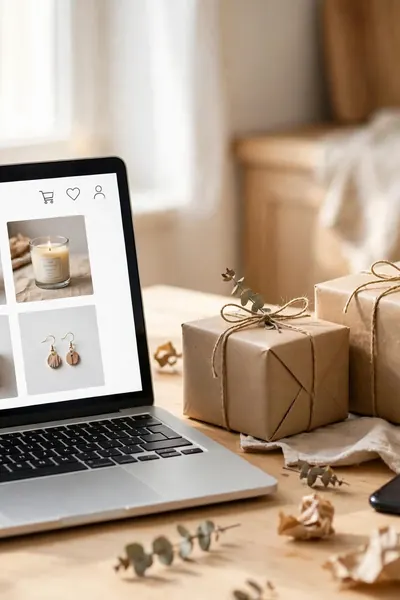
- Etsy: a ready audience searching for gifts, with listing fees and competition as the trade.
- Your own simple shop page: no marketplace fees per view, full control, but you bring every visitor yourself.
- Local orders: shops, salons, and offices that buy in person, with no postage and fast feedback.
- A payment method buyers trust: card payments through your platform, never cash only.
- One clear delivery promise: dispatch days and local pickup times written where buyers see them.
Most beginners thrive on two channels: Etsy for discovery and local orders for margin. A personal shop page earns its place later, once repeat buyers exist. Two channels run well will always beat three channels run thin, especially with a kitchen table as headquarters for now.
Also Explore: 20 Profitable Boho Crafts to Sell at Weekend Markets
Photos That Sell the Box Before the Description
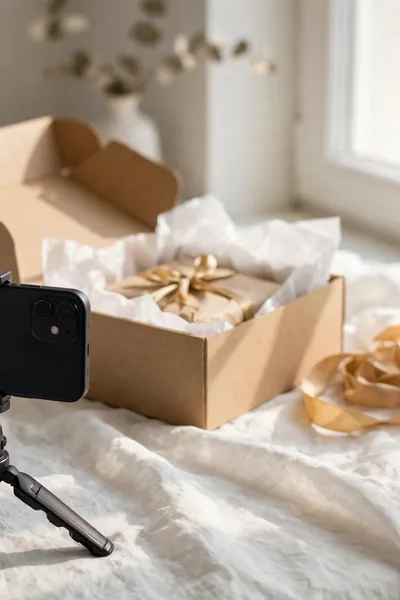
Before: Boxes shot at night under yellow kitchen lights, backgrounds full of counters and clutter. The listing looks tired, the colors lie, and buyers scroll past a box they would have loved in person.
After: The same box photographed at a bright window on plain linen, tissue open, card visible, one shot in hand for scale. Colors read true, the box looks giftable, and clicks turn into questions and orders.
Shoot four frames for every listing: the closed box, the open reveal, a close detail of the hero item, and the box in hands for scale. Phone cameras handle all four easily. Consistency across listings makes a tiny shop look like a brand buyers remember.
Your First Ten Sales: A Simple Launch Plan

Do This:
- Tell your circle plainly: what you sell, who it suits, and the launch price, with one good photo.
- Place one sample box where gifts get discussed: a salon counter, a florist, a friendly office desk.
- Offer a founding buyer thank you, like a free card upgrade, instead of cutting your price.
- Ask every early buyer for a photo and one honest sentence you may quote.
Avoid This:
- Announcing to everyone before a single box can actually be ordered and paid for.
- Discounting so deeply that your first ten sales teach buyers to wait for sales.
- Giving boxes away free in hope; hope is not a marketing channel.
- Going quiet after launch week; the second week of posts sells what the first week planted.
Ten sales is a small number with a large job: it proves strangers will pay, teaches your packing speed, and fills your listings with real reviews. Chase those ten one conversation at a time, and the next ten arrive carrying the first ten’s recommendations with them.
Marketing on Pinterest and Instagram
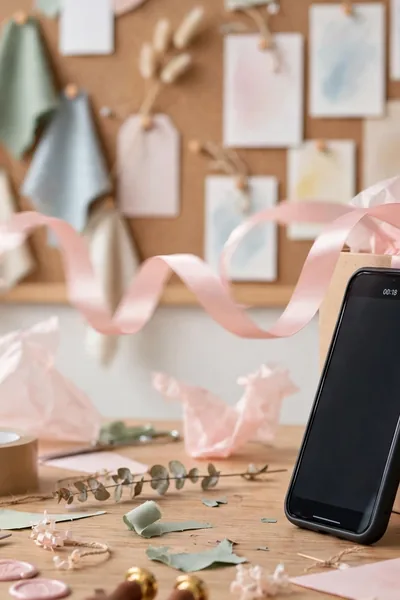
Best Content: Packing videos and open box reveals | Posting Rhythm: 3 to 5 times weekly | Seasonal Lead: 6 to 8 weeks early | Pro Tip: Film packing you already do
Pinterest rewards the process: hands packing, tissue folding, the ribbon pull, the lid closing on something beautiful. Film real orders as you pack them and each sale creates its own marketing. Seasonal boards built two months early catch buyers exactly when they start planning gifts.
Corporate and Bulk Orders: The Quiet Money
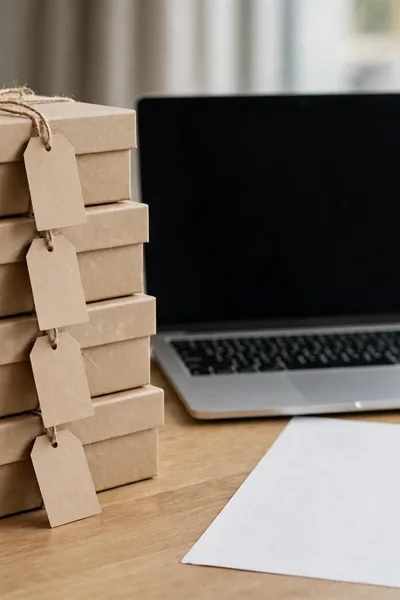
One office order can equal a month of single sales. Businesses need client thanks, staff appreciation, and event gifts, and they value reliability over novelty: the same good box, delivered on the promised date, every single time without drama.
Reach them simply. Carry two sample boxes into local offices, salons, and real estate agencies, leave a one page price sheet with bulk tiers, and follow up once, politely. Realtors closing gifts and offices at holidays are the steadiest first clients a small maker can win. Keep minimums low at first.
Shipping Boxes That Arrive Beautiful

Shipping is where a beautiful box goes to be tested by vans, belts, and doorsteps. Your job is to pack for the journey, not the shelf, so the buyer opens the same box you closed, with every ribbon still behaving.
- Cushion inside the gift box first, so nothing moves when the box is shaken gently.
- Place the gift box inside a shipping carton with paper or padding on all six sides.
- Tape seams fully, label clearly, and photograph the packed carton before it leaves.
- Choose tracked postage and keep the receipt until delivery is confirmed by the buyer.
The Seasonal Calendar That Runs Your Year
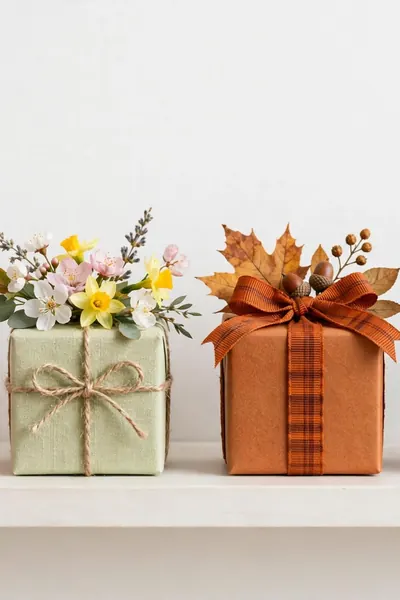
Quick Tip: Buyers plan gifts six to eight weeks before the day itself. Your Valentine’s boxes should be listed while others are still clearing Christmas stock, and your Christmas range belongs in front of buyers by early autumn.
Build the year on four anchors: Valentine’s Day, Mother’s Day, graduation season, and Christmas, then fill quiet months with birthdays, thanks, and encouragement themes. Order seasonal stock one season ahead, in small depth. A calendar on the wall turns panic buying into calm, cheap, planned buying.
Mistakes That Quietly Kill a New Gift Box Business

Common Mistake: Launching with five themes, deep stock, and prices copied from bigger sellers. Money spreads thin, nothing sells fast enough to reorder, and the maker concludes the idea failed when only the shape of the start was wrong.
The Fix: Start narrow and priced honestly: one niche, shallow stock, real costs counted. Grow the range only from what repeat buyers ask for. A small start that profits teaches more in a month than a large start that bleeds quietly.
Other quiet killers are skipping the profit check entirely, photographing once and never again, and packing every order like the first one matters less. In my experience, businesses rarely die from one big error. They fade from small unchecked ones, repeated weekly, until the money runs out.
How Long Until It Pays, and What Growth Looks Like
What You Need:
- First order: often within the launch month, usually through your own circle and one local placement.
- First profitable month: commonly months three to six, once pricing and one niche settle.
- Packing speed: a practiced box takes ten to fifteen minutes, down from forty at the start.
- Help or more space: worth it when orders wait more than three days or the table never clears.
- A growth signal that matters: repeat buyers and one corporate client returning without being chased.
Judge progress by profit and repeats, not by follower counts or one busy weekend. A business that pays for its stock, then its ribbon, then a small wage is growing in the right order. Kitchen tables have started many steady incomes; yours earns its place one honest month at a time.
Frequently Asked Questions
1. How much money do I need to start?
Most beginners start between 150 and 400 dollars: boxes, filler, ribbon, cards, and stock for ten to twenty boxes in one niche. Your kitchen usually supplies the table, scissors, and storage space for free.
2. Can I sell boxes with food in them?
Often yes, but food carries rules. Many areas require a cottage food permit for home made items, while sealed shop bought items are simpler. Check your local rules before listing any edible box.
3. Do I need a website to begin?
No. A marketplace listing and local orders cover most first sales. Add your own shop page later, when repeat buyers give you a reason to pay for one.
4. How long does one box take to pack?
A first box can take forty minutes. With a practiced order of work and a packing kit ready, most makers reach ten to fifteen minutes per box within their first twenty orders.
5. Who pays for shipping, me or the buyer?
Either can work, but choose one way and state it clearly. Many sellers add postage at checkout for small boxes and build it into the price for corporate and bulk orders.
6. What if sales are slow in quiet months?
Slow months are normal. Birthday, thank you, sympathy, and encouragement boxes sell all year, and quiet weeks are the right time to photograph new themes and prepare the next season early.
Conclusion
You now hold the whole map, from one niche and a notebook page of research to priced boxes, first sales, and a calendar that carries the year. The decision to start gift box business work from your kitchen was never about space. It was about starting honestly: real costs, one good box, and buyers found one at a time.
I’ve seen how making this one change can completely shift the result: one niche, priced honestly, beats a cupboard of guesses. Save this guide on Pinterest, build your sample box this week, and share it with the friend who keeps saying she should sell something. Her kitchen table is ready too.