
25 Cozy Coffee Bar Ideas for Slow Mornings at Home
If your morning coffee starts with digging past the toaster, hunting for filters, and wiping up yesterday’s grounds, the problem is not your coffee, it is the setup. These coffee bar ideas fix that with one small, dedicated spot where everything waits for you.
In my experience, a coffee corner only needs two feet of space and things you already own to change how a morning feels. This guide walks through 25 setups, from a simple tray to a hidden cabinet, with the essentials, the right spot, and the mistakes to skip, so you can build yours this weekend. Pick the one that fits your kitchen today.
Why a Small Coffee Bar Changes Your Mornings

A coffee bar is not extra decor. It is one small spot where the machine, mugs, and beans live together, so your morning starts calm instead of chaotic. No opening five cabinets. No hunting for filters while you are still half asleep.
The best coffee bar ideas work on any budget because the magic is placement, not price. When everything waits in one place, making coffee becomes a small ritual you look forward to: grinding, pouring, breathing for one quiet minute before the house wakes up. That calm start follows you all day.
What Every Coffee Bar Needs
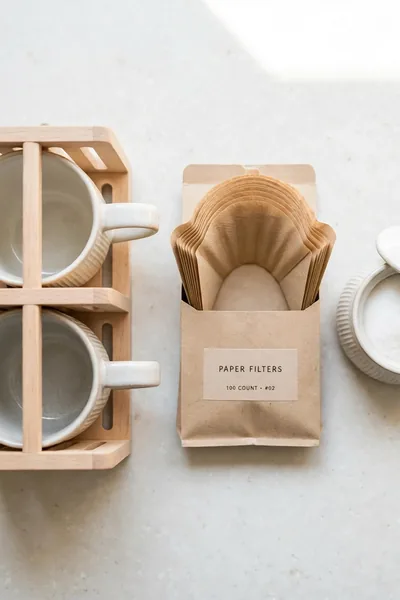
A working coffee bar needs fewer things than most people buy, but each one earns its place. Start with the short list below and add extras later, because a crowded bar slows your morning down instead of making it calmer and easier.
- Choose one brewer you love, drip machine, French press, pour over, or espresso maker, and give it the spot closest to the outlet.
- Keep everyday mugs on a hook rail or small stand within arm’s reach, never more than eight, so washing stays easy.
- Store beans or grounds in an airtight canister beside the brewer, with the scoop living inside the lid.
- Add filters, a small sugar bowl, and your favorite sweetener in one small tray so nothing wanders around the counter.
- Keep one folded cloth under the tray for drips, because a ten second wipe keeps the whole corner looking fresh.
Also View: 23 Fresh Winter Kitchen Decor Ideas to Beat the Blues
How to Set Up Your Coffee Bar in the Right Spot
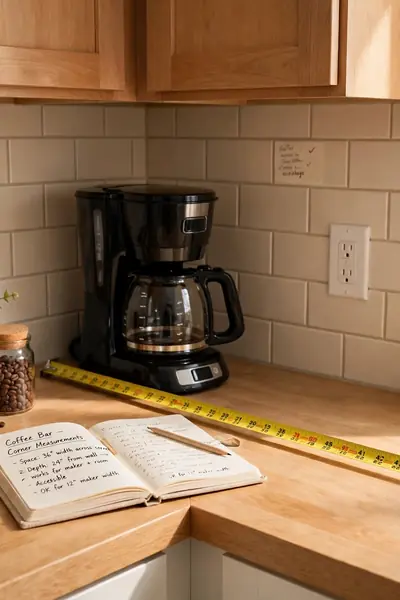
Quick Tip: Stand where you plan to brew and check three things before you move a single mug: an outlet within reach, water nearby, and enough room to open the machine’s lid fully. A pretty corner that fails any of these becomes annoying within a week.
Give the setup about two feet of counter width if you can, and keep it away from the sink’s splash zone and the stove’s grease. In my experience, the corner you pass first when you walk in half asleep wins, because a coffee bar only works when reaching it feels automatic.
Countertop Coffee Nook
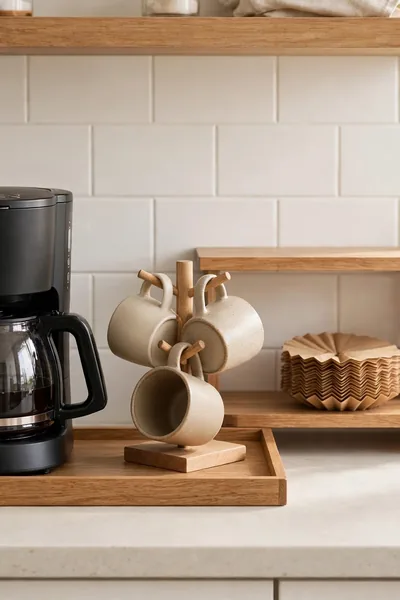
Common Mistake: Most people spread the coffee gear along the whole counter, so the nook swallows the kitchen’s best prep space. Within a month, the machine sits behind the fruit bowl and making coffee means moving three things first.
The Fix: Claim one clear stretch of counter, about two feet wide, and defend its borders. Everything for coffee lives inside that stretch on one tray or mat, and nothing else is allowed to land there, ever.
A small riser or shelf inside the nook doubles your space without touching the borders, with mugs on top and filters below. Keep the machine at the front edge so steam rises clear of the cabinets above and never stains their paint over time or warps the wood.
Rolling Coffee Cart

What You Need:
- A sturdy three tier rolling cart: Metal or wood both work, but the wheels must lock so the cart stays put while you pour.
- Your brewer on the top tier: The top level is your working surface, kept clear except for the machine and one mug.
- Canisters and syrups on the middle tier: Beans, filters, and sweet things live in the middle, easy to reach and easy to see.
- Extra mugs and towels on the bottom tier: Guests’ mugs, spare filters, and clean cloths stay below, out of the daily path.
- One small tray on top: It catches drips and grounds, and it lifts out for a ten second wash.
Park the cart beside an outlet at night so the morning starts with zero setup, and roll it to the table when guests come. I’ve noticed a cart bar suits small kitchens best, because the whole station moves out of the way on cooking days.
Coffee Bar on a Tray
Before: Coffee supplies drift across the counter, the machine in one corner, mugs in a cabinet, beans near the stove. Every morning starts with a small search, and the counter never looks tidy for more than an hour.
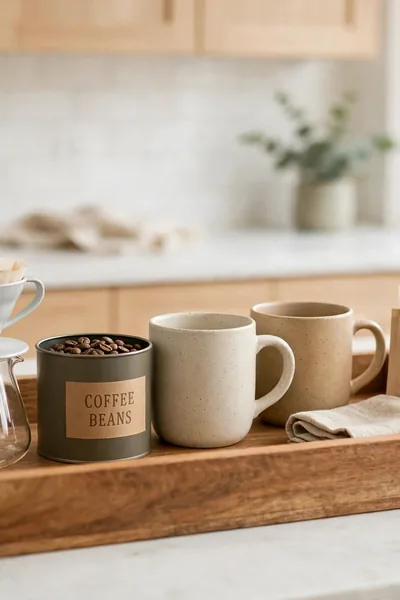
After: Everything sits on one large tray: brewer at the back, canister and mugs in front, filters tucked at the side. The whole coffee bar lifts away in one move for cleaning, and the counter looks styled even on busy days.
Choose a tray with handles and a raised edge, about the size of a baking sheet or larger, so nothing slides when you carry it. A tray bar is the fastest of all these setups, ready in ten minutes with things most kitchens already own.
Hidden Coffee Cabinet

Do This:
- Fit the inside of one upper or lower cabinet with your brewer, mugs on hooks under the shelf, and canisters in a row.
- Add a small pull out tray under the machine so it slides forward for filling and slides back out of sight.
- Stick a battery light strip under the cabinet top, because a dark cabinet hides your beans and sugar.
- Keep the cabinet nearest the sink, so water refills take two steps, not a walk across the kitchen.
Avoid This:
- Avoid storing beans on the cabinet floor where steam from the machine rises into them every morning.
- Avoid a cabinet with a fixed middle shelf that leaves no height for your machine’s open lid.
- Avoid hiding the sugar and filters in a second cabinet, because a split setup defeats the whole idea.
Measure the cabinet’s inside height with the machine’s lid open before you commit, not after. When it works, your counter stays completely clear all day, and opening one door in the morning feels like opening a tiny private cafe at home, made only for you.
Built-In Coffee Cabinet
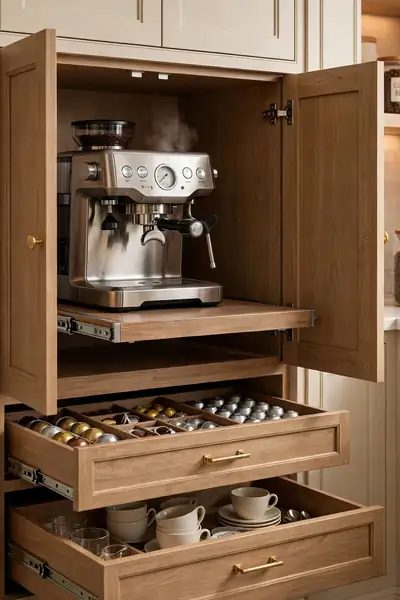
Time Needed: A weekend for a simple insert, longer for custom work | Difficulty: Medium to hard | Cost: Medium to high | Best For: Homeowners planning a kitchen refresh
A built-in earns its cost when it hides the machine behind doors that match the kitchen, with a pull out shelf at counter height and a water line or a large tank inside. Plan the electrical outlet inside the cabinet before anything gets built or ordered.
Rustic Farmhouse Coffee Bar
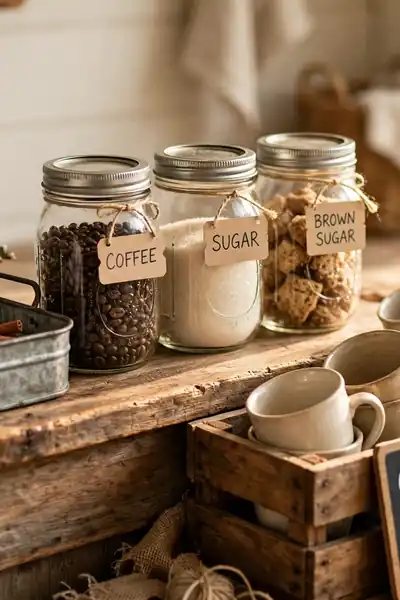
Farmhouse style forgives a mixed collection better than any other look, which is why it suits real kitchens. Galvanized trays, mason jar canisters, a wooden crate for mugs, and a small chalkboard sign come together without needing to match perfectly or cost much.
Keep the palette to warm wood, white, and black lettering so the corner reads calm instead of cluttered. A buffalo check cloth under the tray and one small plant finish the look, and the whole setup wipes clean in under a minute. Guests always find this corner first.
Also Explore: 24 Stunning Farmhouse Kitchen Decor Ideas on a Budget
Minimalist Scandinavian Coffee Station
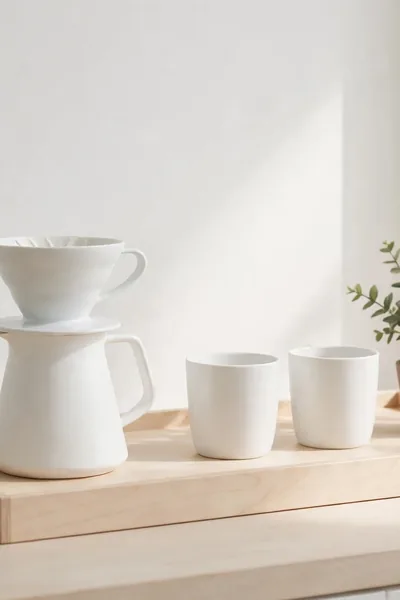
Scandinavian style rests on one strict rule: everything visible must earn its place, and everything else lives behind a door. The palette does the decorating, pale wood, white, and one soft color, so the station looks calm even when it is tiny.
- Choose pale wood or white surfaces and one accent color, then remove every item that does not fit the palette.
- Keep only the brewer, one canister, and two mugs in view, with the rest stored in the nearest drawer.
- Pick mugs and jars in the same simple shapes, because matching silhouettes calm a small space more than matching colors.
- Add one green plant in a plain pot for life, and nothing else that does not help you make coffee.
Cottagecore Coffee Corner

Quick Tip: Cottagecore charm comes from layers, not clutter. Start with a floral cloth or vintage tray as your base, then add pieces one at a time and stop the moment the corner feels full, because one item too many tips it into messy.
Thrift stores and family cupboards supply most of this look for almost nothing: a chipped teapot for sugar, lace under the canisters, dried flowers in a jam jar. Nothing needs to match, because in this style the gentle mismatch is exactly the point of the whole corner.
Industrial Coffee Bar
Common Mistake: Beginners copy the industrial look with only dark colors, black machine, dark wood, dark wall, and the corner turns gloomy instead of bold. Without contrast, every item disappears into one heavy shadow by evening.
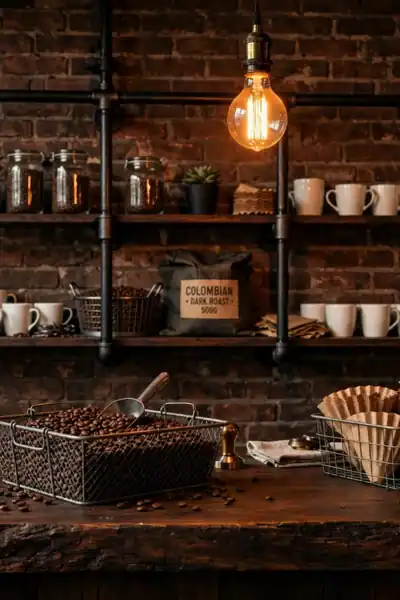
The Fix: Keep two dark materials at most, like black metal shelves and a deep wood counter, then add one bright break: white mugs, a pale backsplash, or a warm bulb. Industrial style needs that contrast to show its edges.
Pipe shelves and metal baskets carry this look for very little money, and both install in under an hour. Finish with one Edison style bulb above the station, because its warm glow softens the metal and makes morning coffee feel like a small city cafe.
Bold Accent Wall Coffee Bar
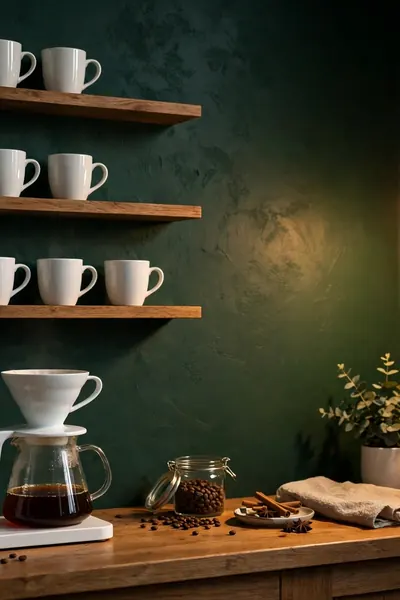
What You Need:
- One bold paint color or peel and stick wallpaper panel: It covers only the wall behind the station, so a quart of paint is usually enough.
- A sample pot and painter’s tape: Test the color in morning light first, because bold shades shift a lot between daylight and bulb light.
- Simple shelves or a rail in a quiet finish: The wall is the star, so hardware should support it, not compete with it.
- Your usual brewer and mugs in white or clear glass: Light pieces pop against a deep color instead of vanishing into it.
- One warm light source: A small lamp or strip light keeps a dark wall feeling rich instead of flat.
Paint only the slice of wall behind the station, from counter to cabinet, and the job takes one afternoon including drying time. If you rent, peel and stick panels give the same drama and come down clean when you move out one day for good.
Luxury Espresso Corner
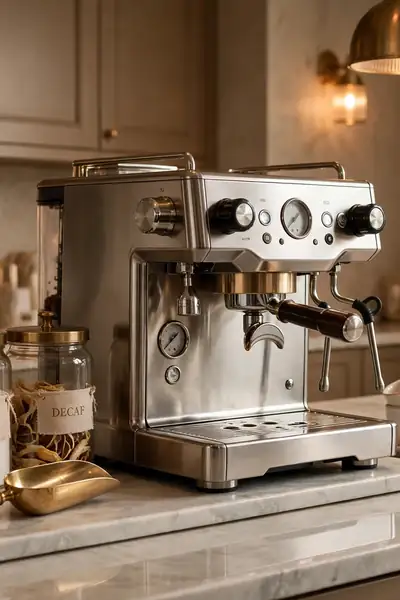
Before: A good espresso machine sits squeezed between the toaster and a pile of mail, with cups stacked wherever they fit. The equipment is expensive, but the corner looks like storage, and pulling a shot feels like a chore.
After: The machine owns a clean stretch of counter on a marble look tray, cups warm on top, beans in a glass canister with a brass scoop. Everything matches in metal and glass, and the corner reads like a hotel coffee station.
Luxury here comes from editing, not spending: remove everything that is not metal, glass, or stone, and the corner instantly looks twice its price. Add one small plant or a framed print above, and keep the tray polished weekly, because shine is the whole effect.
Wall-Mounted Shelf Coffee Bar
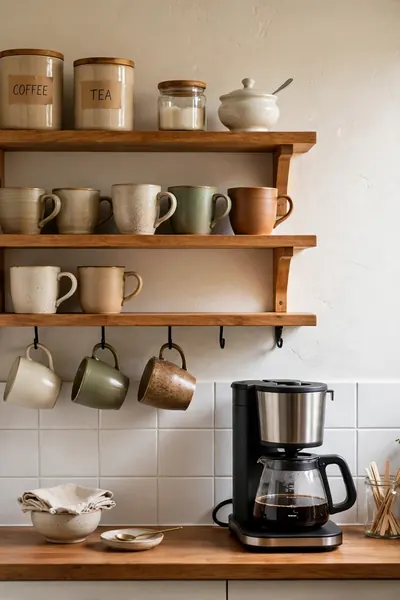
Do This:
- Mount two or three sturdy shelves above a slim counter or table, with the brewer below and storage above.
- Anchor every shelf into wall studs or use proper heavy duty anchors, because shelves carry real weight daily.
- Keep daily items on the lowest shelf at arm height, and rarely used pieces on the top shelf.
- Add under shelf hooks for mugs, which frees the shelf surface for canisters and the sugar bowl.
Avoid This:
- Avoid floating shelf kits with weak brackets, since a shelf of mugs and beans is heavier than it looks.
- Avoid mounting the first shelf too high, because reaching over a hot machine for beans is unsafe.
- Avoid open shelves right beside the stove, where grease in the air coats everything within weeks.
This setup gives back the most counter space of any idea here, which is why it suits galley kitchens so well. I’ve tried this in a narrow kitchen, and the freed counter alone made weekday cooking calmer, not just the coffee making every single morning.
Small-Space Pegboard Coffee Bar
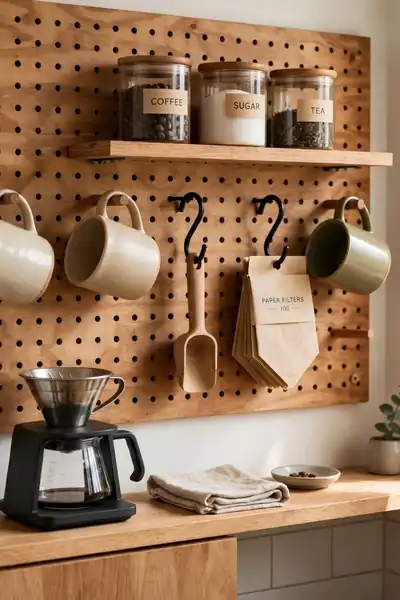
Space Needed: About 2 feet of wall | Difficulty: Easy | Cost: Low | Best For: Tiny kitchens and studio apartments
A pegboard turns one flat wall into storage for mugs, filters, a small shelf, and even the brewer’s cord, all off the counter. Paint the board to match the wall for a calm look, or stain it warm so the whole station reads as one finished piece.
Coffee Bar in a Closet or Pantry

A shallow closet or a wide pantry makes a surprisingly roomy coffee bar, because doors hide everything and shelves already exist. Clear two shelves, add the brewer and your daily mugs, and the morning mess disappears behind a closed door. It costs almost nothing to try.
Power is the one real question, since many closets have no outlet inside. An electrician can add one, or a heavy duty cord through the door gap works for a simple drip machine. A battery light strip under the top shelf finishes the setup.
Coffee Bar Under the Stairs
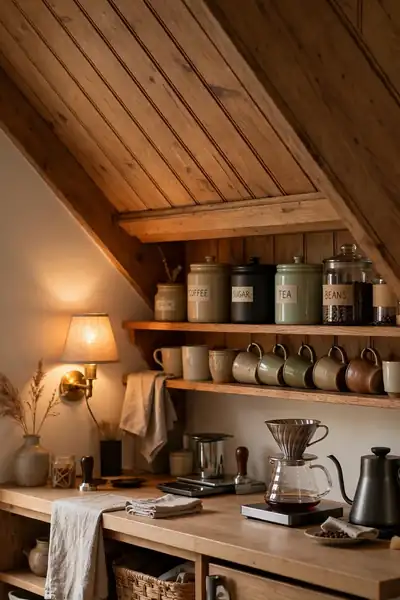
The triangle of space under a staircase usually holds coats, boxes, or nothing at all, yet its tall end fits a brewer and shelves perfectly. With one outlet and a little paint, that dead corner becomes the most talked about spot in the house.
- Measure the tall end first and place the brewer there, because you need standing headroom while you fill the water tank.
- Run power safely: use the nearest outlet or have one added, and never trail a cord across the walking path.
- Fit two shelves along the sloping side for mugs and canisters, following the angle instead of fighting it.
- Add a battery or plug in light, since under stair corners are dark even at noon.
- Keep a small stool or cushion nearby if the nook is deep, and the spot doubles as a quiet morning seat.
Renter-Friendly Coffee Bar With No Drilling
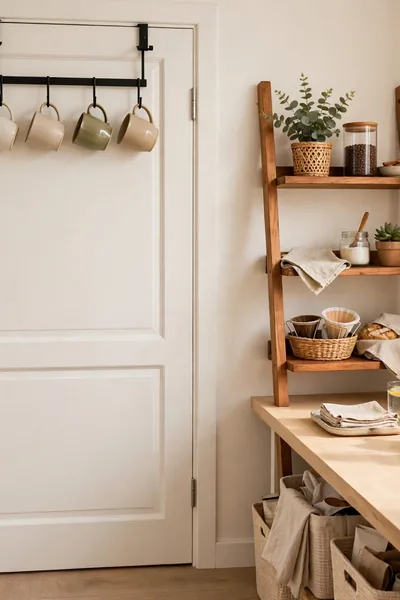
Quick Tip: Build the whole station on things that stand, lean, or hang over doors, and a rental kitchen needs zero holes. A leaning shelf, an over the cabinet door hook rail, and a tray setup together hold everything a drilled setup does.
Take one photo of the corner before you start, and you can restore it exactly on moving day. Damage free strips hold surprising weight now, but keep them for mugs and light shelves only, and let anything holding the brewer stand firmly on the counter.
Repurposed Dresser or Hutch Coffee Bar
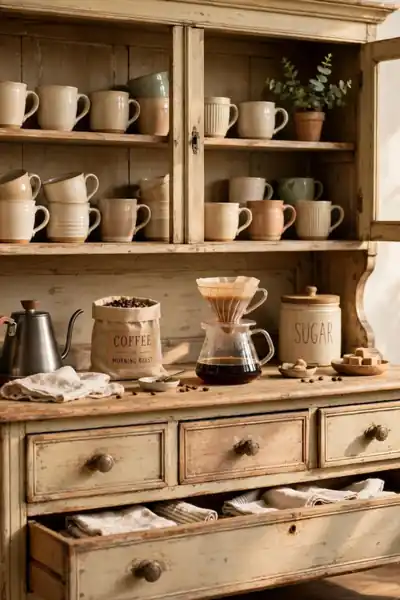
Common Mistake: People drag home a beautiful old dresser and load it the same day, forgetting that wood drinks coffee spills and steam warps old finishes. Within weeks the top is ringed with stains and the drawers swell shut.
The Fix: Seal the top surface with a waterproof finish or cover it with a fitted tray or glass panel first. Then load the drawers with filters, pods, and spare mugs, and keep the machine on the protected zone only.
A hutch gives you shelves above and storage below in one piece, which no other idea here matches at thrift store prices. Sand one rough edge, tighten the handles, and a forgotten furniture piece becomes the warmest corner of the kitchen by this coming Sunday.
Dining Room Sideboard Coffee Bar
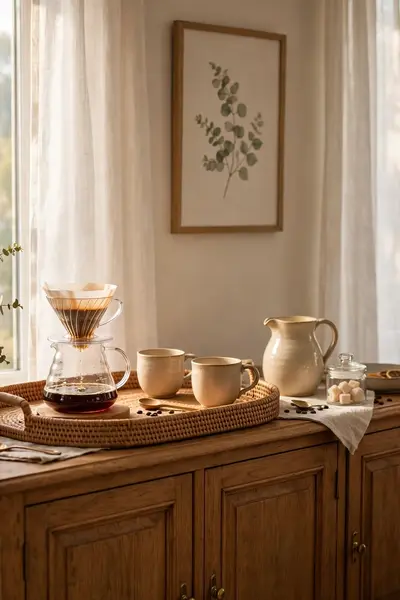
What You Need:
- A sideboard or buffet with a flat top at a comfortable pouring height: Most dining sideboards already sit at exactly the right level.
- Your brewer and a large tray: The tray protects the wood top from drips and defines the coffee zone clearly.
- Cups, saucers, and a small pitcher on the top: Guests serve themselves without entering your kitchen workspace at all.
- Inside storage for beans, filters, and napkins: The cabinets below hold refills, so the top never looks crowded.
- A small plant or framed photo at one end: It ties the coffee spot into the dining room’s decor.
This setup shines on weekends and holidays, when guests drift to the sideboard with their cups while you finish cooking in peace. On weekdays it still serves you, because a coffee station beside the table turns an ordinary breakfast into a slower, seated morning ritual at home.
Bedroom Coffee Bar for Slow Starts
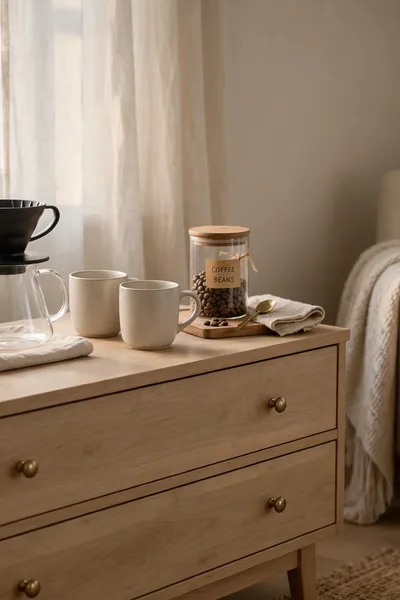
Before: The alarm rings, and the first coffee waits downstairs, past the bathroom line and the kitchen cleanup from last night. By the time the cup is ready, the slow morning you wanted is already gone and the rushing has started.
After: A small brewer on the dresser hums while you open the curtains, and the first cup happens in a robe, in daylight, at nobody’s pace but yours. The whole station fits on one tray and asks only for water from the bathroom tap.
Keep the setup honest and small: brewer, two mugs, one canister, and a tiny waste bowl for used pods or grounds. I’ve seen this work best in guest rooms and primary bedrooms with a corner chair nearby, where the coffee becomes part of waking up slowly.
Window Nook Coffee Bar
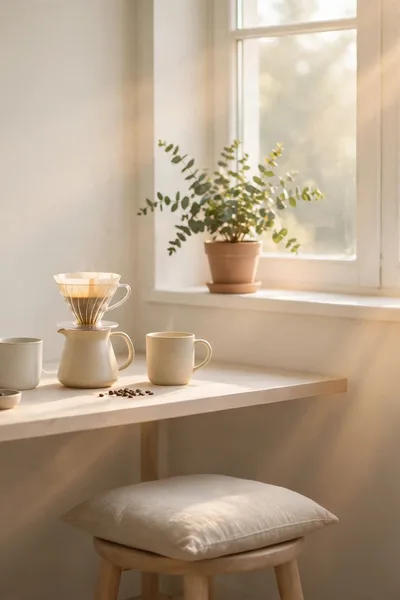
Do This:
- Place a slim table or cart under the brightest window and let natural light be the whole decoration.
- Keep the palette pale and simple so nothing competes with the view outside the glass.
- Add a small stool or cushion seat, because this nook is for sitting, not standing and rushing.
- Put one plant on the sill where it shares the light with your morning cup.
Avoid This:
- Avoid placing beans or grounds on the sill itself, since direct sun warms them and flattens flavor fast.
- Avoid heavy curtains or dark furniture here, because they steal the light that makes this idea work.
- Avoid a tall machine that blocks the lower window, which kills the open feeling of the nook.
This is the cheapest idea in the whole list to try, because the window does the styling for free. Even a folding table works for a first test, and one slow weekend morning beside it will tell you if the spot deserves a permanent table.
Coffee and Tea Combo Bar

Setup Time: About 30 minutes | Difficulty: Easy | Cost: Low to medium | Best For: Homes where coffee and tea drinkers share one kitchen
Give each side its own tray and its own color of mug, and two morning routines stop colliding in one small space. A small electric kettle earns its place here, because tea water at the right heat and coffee water never need to wait for each other.
Cafe-Style Syrup and Flavor Station
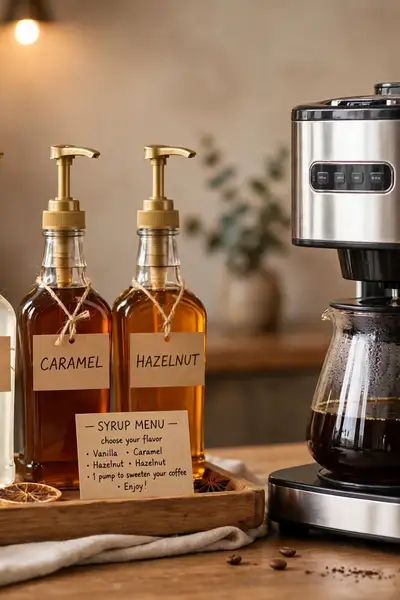
A row of syrup bottles beside the brewer is the one upgrade that makes home coffee taste like a cafe order. Vanilla, caramel, and hazelnut cover most cravings, and a small shaker of cinnamon or cocoa handles the rest without extra bottles.
Keep the station tight: three syrups, one shaker, a small dish for drips, and pumps instead of pour caps so mornings stay clean. Labels facing forward look styled on purpose, and a tiny menu card leaning nearby turns the corner into your own little counter. Guests love reading it first.
Thrifted Coffee Bar on a Budget
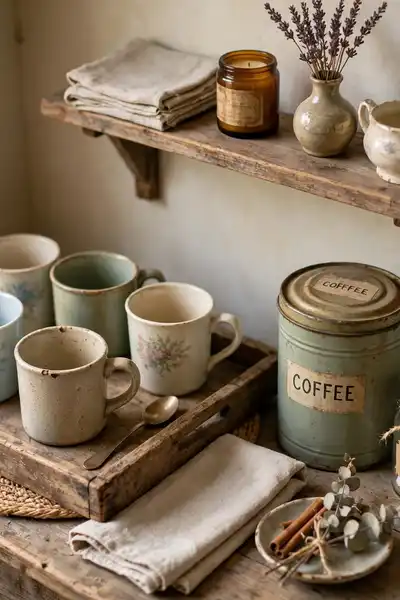
Almost everything a coffee bar needs already exists in thrift stores, because mugs, trays, canisters, and small shelves are the first things people donate. Shopping secondhand first can cut the cost of the whole setup to a fraction of buying new.
- Make the essentials list from Section 2 before you go, and shop only for those pieces, because thrift stores reward a plan and punish browsing.
- Check every mug and canister for chips and cracks in good light, and smell canisters, since old smells move into coffee beans.
- Pick one finish family, wood, white, or metal, so donated pieces from different decades still look like one set.
- Wash everything hot and soapy at home, run the brewer’s first cycle with plain water, and your bar is ready.
Holiday-Ready Coffee Station

Quick Tip: Build the holiday version on the same tray as your everyday bar, and the swap takes ten minutes. Store the seasonal pieces in one labeled box, mugs, a small sign, a strand of greenery, and one flavored syrup, so nothing gets lost between seasons.
Change only three things per season and the corner always feels fresh without a full restyle: the mugs, the cloth under the tray, and one scent or flavor. Peppermint and gingerbread belong to winter, while spring asks for pale colors and a small vase of flowers.
Cozy Corner Coffee Nook
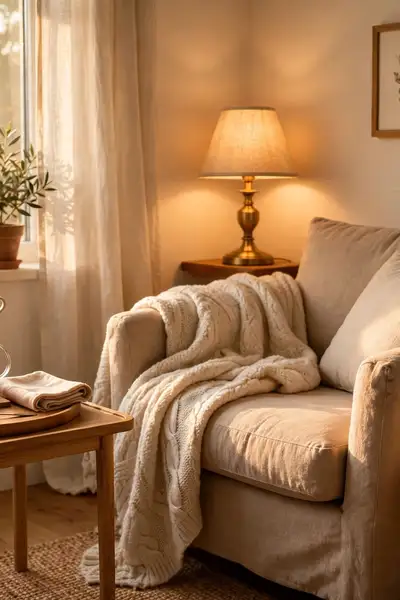
Common Mistake: Many people build the cozy corner around the machine alone, with nowhere to sit and nothing soft nearby. It looks sweet in a photo, but nobody lingers there, and the nook slowly turns back into plain storage.
The Fix: Style for the person, not the machine: a small chair or cushion, a soft throw within reach, and warm light at sitting height. When the seat invites you to stay, the corner becomes a ritual instead of a display.
This corner is where the whole list comes home, because it asks for the least money and gives back the most calm. Start here if you feel unsure which idea fits your home, since a chair, a tray, and morning light rarely disappoint anyone at all.
Coffee Bar Mistakes That Make Mornings Harder

What You Need:
- One tray under the whole setup: Most bars fail by spreading out, and the tray is what keeps drips, grounds, and clutter inside one border.
- A small waste bowl: Used pods and grounds tossed in the sink each morning are the mess nobody plans for, and a bowl ends it.
- A descale reminder on your phone: Sour coffee usually means a dirty machine, not bad beans, and a monthly reminder prevents it.
- Fewer, better mugs: Twelve mismatched mugs crowd any bar, while four favorites keep the washing simple and the look calm.
The pattern behind nearly every failed coffee bar is the same: too much stuff, in a spot chosen for looks instead of use, cleaned too rarely. Fix those three and even the smallest setup starts giving you calm mornings instead of extra chores before breakfast.
Frequently Asked Questions
1. How much space do I need for a coffee bar?
About two feet of counter, one tray, or a single cart is enough. The tray setup in this list works in the smallest kitchens because everything lifts away in one move.
2. How much does a home coffee bar cost to set up?
It can cost almost nothing if you shop your home and thrift stores first. Most people spend only on a tray, a canister, and maybe a small shelf.
3. Where is the best place for a coffee bar in a small kitchen?
Near an outlet and the sink, in the corner you reach first in the morning. A cart or pegboard wall works when no counter corner is free.
4. How do I keep a coffee bar from looking cluttered?
Keep daily items only, store the rest, and give everything one tray border. A ten second wipe each morning keeps it looking styled instead of used.
5. Can I make a coffee bar in a rental without drilling?
Yes. Use a tray, a cart, a leaning shelf, or over the door hooks. Everything in the renter friendly idea here comes down clean on moving day.
Conclusion
You now know exactly how to turn a crowded counter corner into a calm little ritual, with a setup that fits your space, your budget, and your mornings. These coffee bar ideas prove you do not need a remodel or a big kitchen, only one dedicated spot and a few things you love. I’ve seen how making this one change can completely shift the result, because a slow first cup changes the whole day that follows it. Save this guide on Pinterest for your next free weekend, try the tray setup today, and share it with a friend whose mornings need calm.




One Comment