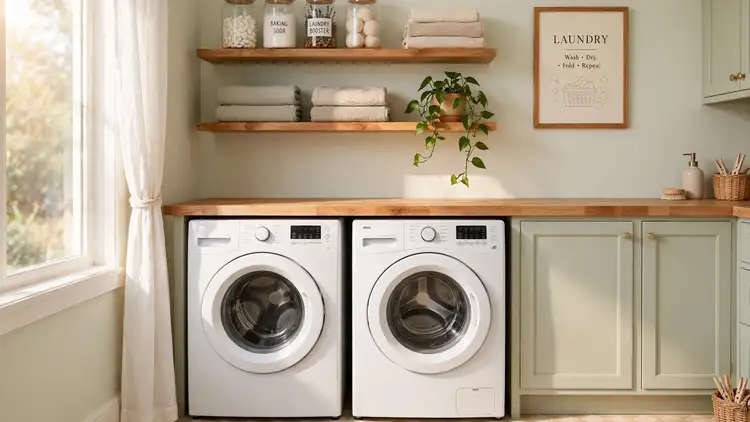
20 Cheerful Laundry Room Decor Ideas You’ll Truly Adore
Nobody dreams about their laundry room, and that is exactly why it stays bare, bright, and faintly depressing. Cheerful laundry room decor asks for so little: a shelf that holds things prettily, a rug that forgives your feet at dawn, one wall with actual personality.
I’ve noticed the rooms people love are never the biggest ones. They are the ones where someone made ten small decisions on purpose: jars that match, light where hands work, a cart in the gap everyone else ignored. These 20 ideas work in real rooms, renters and closet laundries included. Start wherever your room hurts most.
Start With an Honest Look at Your Space

Most laundry rooms are not ugly. They are just unfinished: good machines, bare walls, and nowhere for anything to live. Honest laundry room decor starts before any shopping, with ten minutes of looking. Where does the detergent actually end up? Which corner collects the lost socks and empty hangers?
Measure the wall above the machines, the gap beside them, and the swing of the door. Note where the light falls at the hour you usually wash. Those three notes decide almost every idea in this list, because the prettiest upgrade in the wrong size or the wrong light helps nobody.
Open Shelves That Earn Their Keep
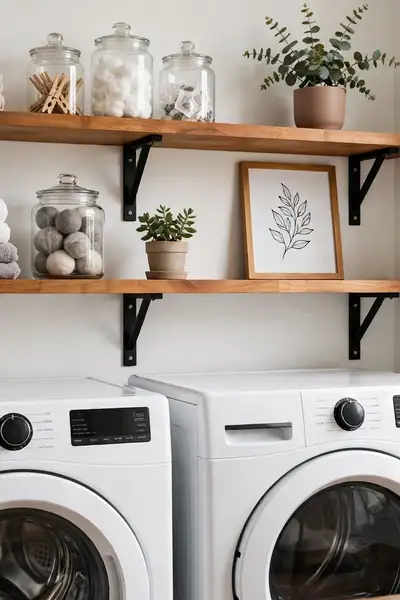
Open shelves earn their place in a laundry room because everything in this room is grabbed with wet hands and no patience. No doors to open, no digging. Keep the shelf depth modest and the styling honest, with the prettiest items at eye level and the workhorses within easy reach.
- Daily supplies, lowest shelf: detergent jar, stain spray, and the lint roller you reach for mid load.
- Weekly supplies, middle shelf: folded towels, extra pods, and the small basket for pocket finds.
- Pretty layer, top shelf: a plant, a framed print, and one woven basket hiding the ugly extras.
- Leave one hand span of empty space on every shelf so the styling can breathe.
- Anchor shelves into studs wherever possible, because full jars are heavier than they look.
Also View: 23 Clutter-Free Bathroom Organization Ideas That Work
Matching Jars for Powders and Pods
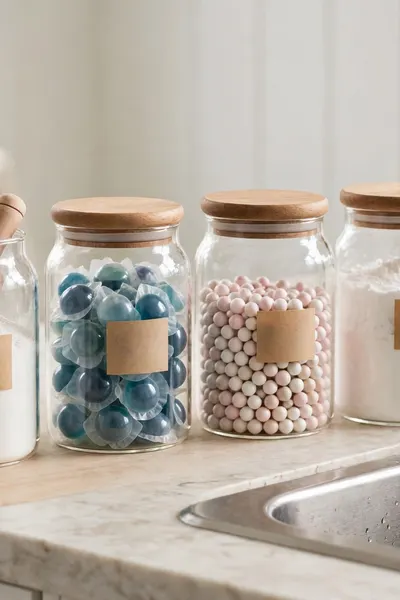
Quick Tip: Decant one product at a time, not the whole shelf in one afternoon. Powders clump when they sit in a jar that was not fully dry inside, so wash, dry overnight, then fill. Keeping the original box under the sink for a week saves you if a jar experiment misbehaves.
Beyond the tidy look, jars fix a quiet safety issue: torn boxes spill, and bright pods in crumpled bags tempt small hands. A lidded jar on a high shelf is slower to open and easier to keep count of. Choose jars with mouths wide enough for the scoop and your hand.
A Folding Station That Folds Away
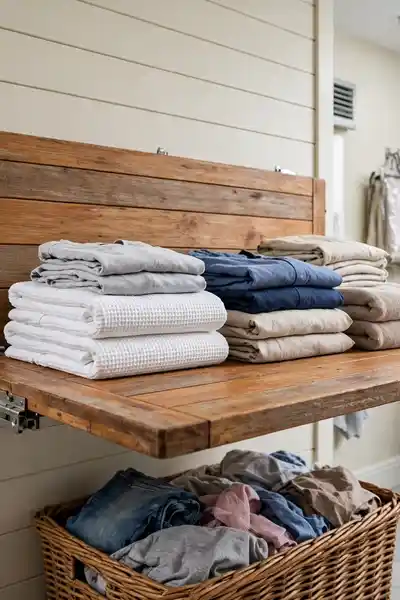
Common Mistake: Folding everything on top of the machines. Warm tops feel handy until vibration walks a neat stack onto the floor, lint coats the clean clothes, and socks slide behind the dryer where they join the lost colony every laundry room keeps.
The Fix: Give folding its own flat surface, even a small one. A wall mounted fold down table, a shelf depth counter beside the machines, or a sturdy board across two hampers all beat the machine tops, because the surface stays still, clean, and yours.
Height decides whether you will actually use it. Set the folding surface near your hip bone, the same height as a kitchen counter, so arms work level instead of reaching up or hunching down. I have noticed a counter at the wrong height quietly turns back into machine top folding within a month.
Wallpaper With One Cheerful Pop
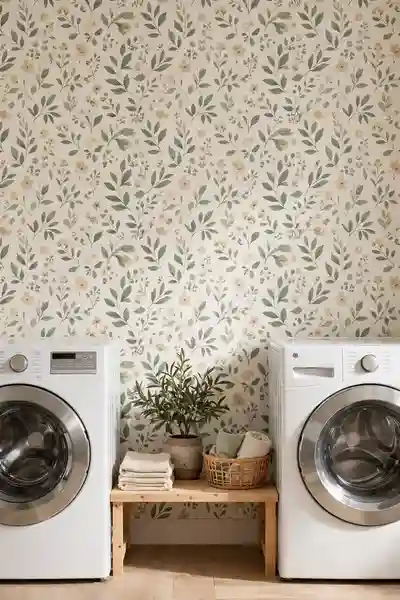
What You Need for One Accent Wall:
- Peel and stick wallpaper, one roll plus a spare half for mistakes
- A smoothing tool or old credit card for bubbles
- A sharp craft knife and a straight edge for outlet cuts
- The wall washed and fully dry, since laundry steam loosens weak paste
- Painter’s tape to preview the pattern repeat before committing
One wall is the sweet spot. Wallpaper behind the machines gives the room its cheerful photograph moment, while the other walls stay calm enough for a working space. In a windowless room, keep the pattern light based and the scale medium, because big dark prints in small windowless rooms can feel closer than they are.
A Wall Mounted Drying Rack
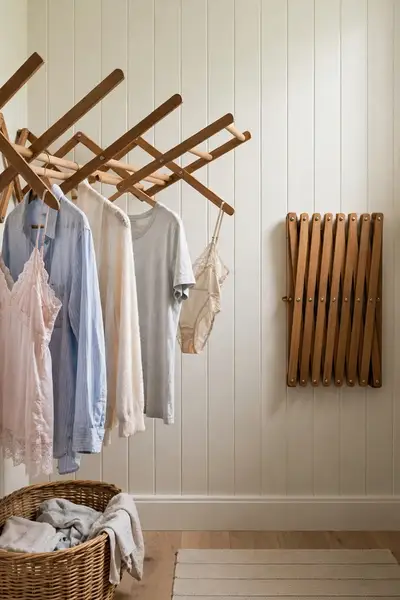
Before: Delicates drape over the shower rail, the door handle, and two dining chairs, and the hallway becomes an obstacle course on wash day. The rack you own lives in a closet because standing it up eats the whole floor.
After: An accordion rack opens from the wall only when needed, holds a full load of hang dry pieces at shoulder height, then folds back to a hand span of depth. The floor stays clear, the doors stay free, and nothing drips onto the walkway.
Mount it higher than feels natural at first, roughly at eye level, so hanging shirts clear the hamper and the machines below. Warm air rises, so clothes near the ceiling of a heated room dry a little faster too. Choose wood or coated metal that tolerates constant damp air.
A Rug That Can Handle the Room
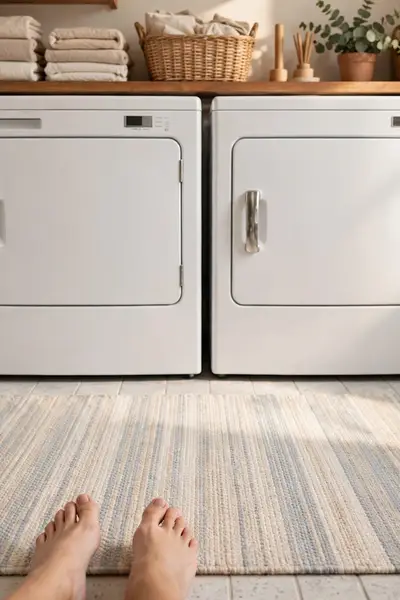
Do This:
- Choose low pile or flat weave that fits under the door swing
- Pick a machine washable runner you can lift with one hand
- Look for a rubber or non slip back for wet tile floors
- Size it to run the full length of both machines
Avoid This:
- Plush bath mat styles that stay damp and start to smell
- Pale solid colors that show every lint ball and drip
- Sizes so small they creep and bunch underfoot
- Precious vintage rugs anywhere near bleach and dye
Cold tile at 7 in the morning is half the reason laundry feels like a chore. A runner changes the room’s temperature story the moment your feet land, and it catches the drips that would otherwise spot the floor. Keep a spare in rotation so laundry day never waits on the rug itself.
Woven Baskets for Every Job
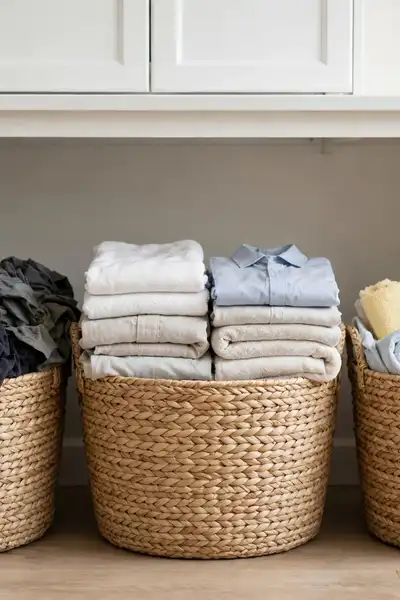
Quick Facts: Jobs: Dirty, clean, and supplies | Material: Seagrass or water hyacinth | Liner: Washable cloth bag | Lifespan: Years with dry storage
Woven texture does something plastic bins never manage: it softens a room full of hard, humming rectangles. Keep the weave tight and the handles strong, because a laundry basket is carried loaded, one handed, through doorways. Line the dirty clothes basket with a washable cloth bag for the weekly empty.
Hooks and Peg Rails by the Door
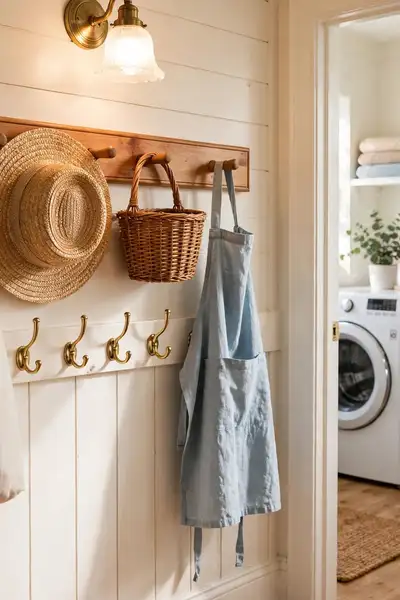
Every laundry room has a homeless layer: the bag that goes to the dry cleaner, the apron with the good pockets, the hat that must not be crushed. Hooks claim that layer. A peg rail beside the door catches each item at the exact moment you walk in carrying it.
Space the pegs wide enough for a full laundry bag to hang without swallowing its neighbors, and mount the rail where the door swing will not batter it. One rail, honestly used, ends the pile on top of the dryer that every household pretends not to see.
Signs and Small Laundry Art
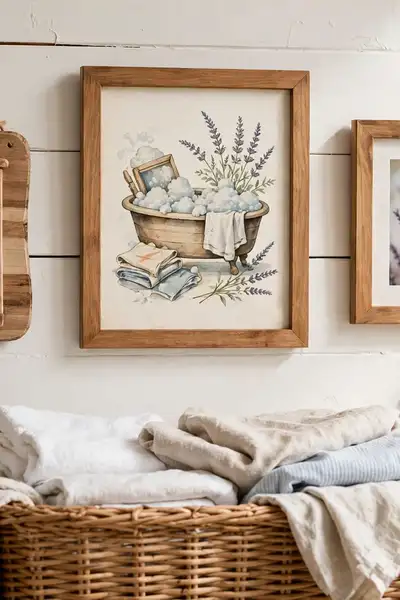
Bare walls are why laundry rooms feel like closets with plumbing. One small gallery, even three pieces, tells the eye this is a room someone finished on purpose. Keep the frames light, the glass easy to wipe, and the humor gentle, since you will read these weekly for years.
- One wooden sign with the house laundry rule or a simple wash dry fold line.
- One framed print with real art value, a botanical or a vintage advertisement reproduction.
- One personal photo, ideally black and white, of the family or the house itself.
- One small mirror or metal piece to bounce light in windowless rooms.
- A shared frame color across all pieces, so different art still reads as one set.
Tall Cabinets That Use the Height
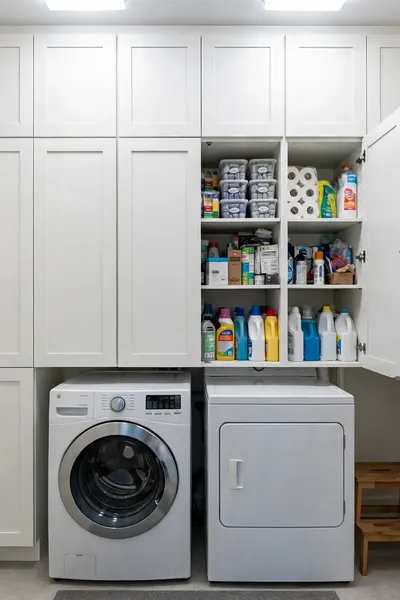
Quick Tip: Measure the ceiling height and the cabinet door swing twice before ordering anything tall. Laundry rooms collect bulk buys, and the top shelf swallows them happily, but only cabinets whose doors clear the light fitting and the sprinkler of real life, the hanging rack, actually get used daily.
Closed tall storage does the opposite job of open shelves, and a good room needs both. Shelves carry the daily grab items; cabinets hide the bulk, the chemicals, and the visual noise. Put the least used things highest, keep a small folding step stool in the room, and the height stops being wasted air.
A Bright and Clean Color Palette
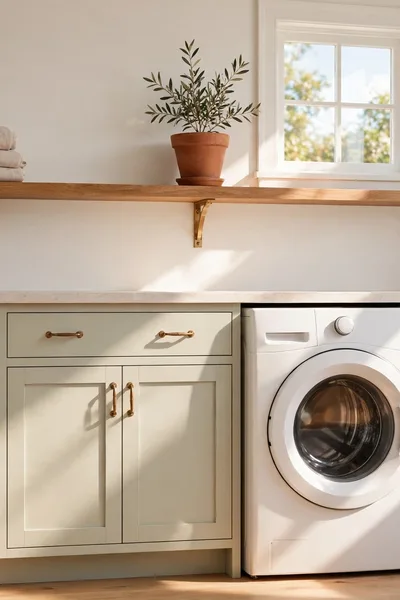
Common Mistake: Copying the all white, all grey laundry rooms from renovation shows. In real homes without studio lighting, that palette turns cold and clinical, and every lint ball and scuff shows like evidence. The room ends up bright but nobody lingers in it.
The Fix: Keep the clean base, then warm it deliberately. Warm white on the walls, one soft color on the cabinets or the door, natural wood on a shelf or counter, and one honest accent like terracotta or brass. The brightness stays; the chill leaves.
Test the palette at laundry hour, not at noon. Most loads happen under the room’s own bulb in the early morning or evening, so hold paint cards under that exact light before committing. Colors that sing at midday can turn grey and tired under a warm ceiling bulb.
A Utility Sink Worth Having
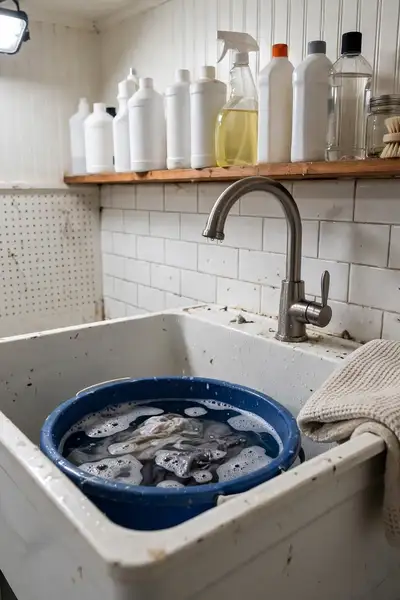
What You Need to Use It Well:
- A deep basin that fits a bucket and a watering can
- A faucet with a sprayer or a tall neck for filling both
- A stain treatment caddy within arm’s reach of the tap
- A mat underfoot, because this corner sees the most drips
- A plug that seals properly for long soaks
Not every laundry room can take one, since a sink needs both a supply line and a drain, but where the plumbing already runs beside the machines, the cost stays modest. Renters skip this section without guilt. Everyone else: it is the single upgrade owners mention most a year later.
Labels That Keep Everyone Honest
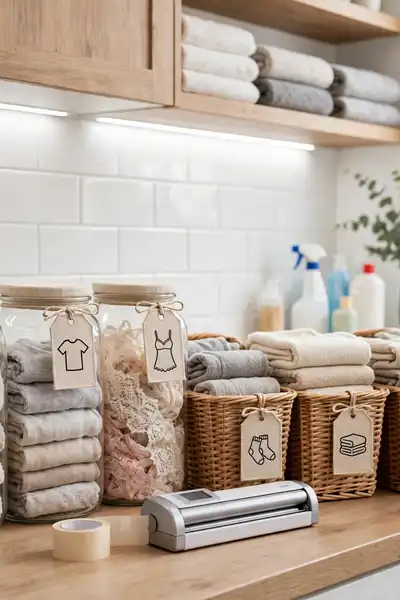
Before: Three people share the room and three private systems collide. The pods live in four places, the good scissors vanish weekly, and every question in the house starts with where did you put. Nothing is actually missing; it is just unfindable in under a minute.
After: Every jar, basket, and shelf edge wears the same clean label in the same hand. A guest could run a load correctly without asking anything. The system survives busy weeks because it no longer depends on one person’s memory.
Label the category, not the brand, so the system survives a shopping change: detergent, pods, stain care, cloths. Choose labels that survive damp hands, either laminated paper, chalkboard style with a fresh rewrite, or embossed tape. Match the label style to the jars for that finished, intentional look.
A Little Greenery That Survives
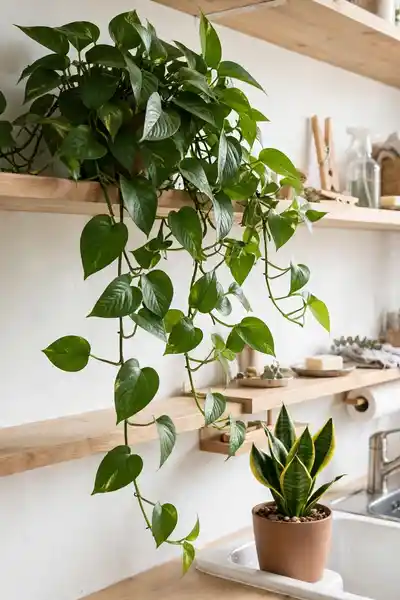
Do This:
- Start with pothos or a snake plant, the forgiving two
- Place plants high, away from bleach and heat vents
- Water on laundry day so the routine carries the habit
- Choose one good fake for a truly windowless room
Avoid This:
- Ferns and fussy plants that resent steam and lint
- Pots without drainage sitting in constant drips
- Plants on the folding surface where loads land
- Scented plants that fight with detergent smells
Green is the one color this room never produces on its own, which is why a single plant changes the mood so much. Start with one pothos and watch it for a month before adding more. In my experience the laundry room either suits a plant or not at all, and one test plant answers honestly.
Under Cabinet Lighting for Dark Corners
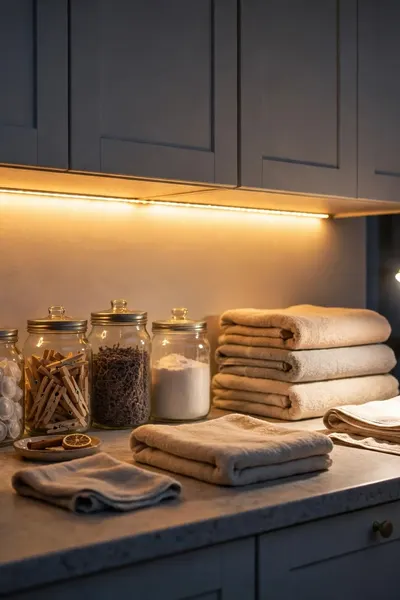
Quick Facts: Type: LED strip or puck lights | Power: Battery for renters, plug in for owners | Color: Warm white | Placement: Front edge of the cabinet underside
Overhead bulbs light the middle of the room and leave the counters in your own shadow, which is where the stain checking and label reading happens. A strip under the cabinet puts the light on the work instead. Battery strips suit renters; plug in strips with a small switch suit owners who sort after dark.
Hampers That Look Like Furniture

The hamper is the largest object in most laundry rooms after the machines themselves, so its looks carry the room more than any sign or print. A lidded, structured hamper reads as furniture; a sagging mesh bag reads as laundry itself, and the room feels undone even on a tidy day.
Buy for the carry as much as the corner. Liners that lift out, handles that survive a full load, and a size matched to your wash rhythm, two days or five, matter more than the prettiest weave. A hamper you hate carrying will live wherever it was last emptied.
Make It Personal With One Signature Touch
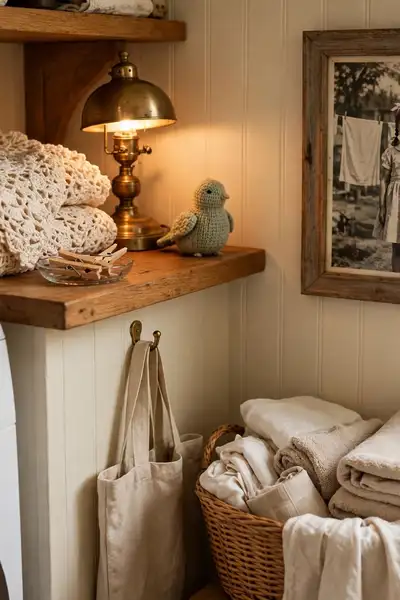
After the storage works and the light is fixed, one personal layer keeps the room from looking like a showroom photograph. This is the cheapest layer of all and the one visitors remember, because it says whose house this is in a room that usually says nothing.
- A framed photo with a family laundry story, a clothesline, a wash day, a grandmother’s yard.
- One color used nowhere else in the house, saved for this room alone.
- A handmade piece, crochet, cross stitch, or a child’s drawing in a real frame.
- A small lamp or candle style light for evening loads instead of the big bulb.
- A thrifted find with history, an old washboard or enamel bowl as shelf decor.
Butcher Block Counter Over the Machines
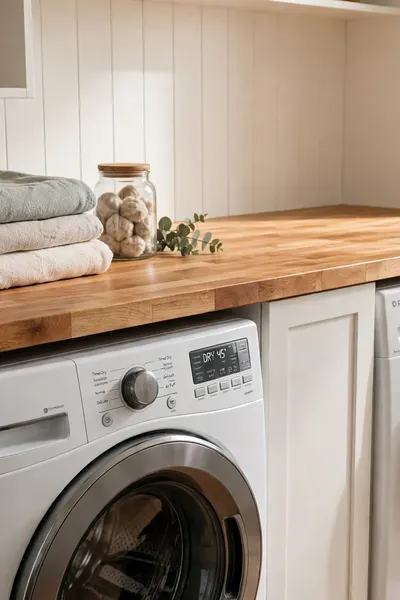
Quick Tip: Keep the machines reachable. A counter that lifts off in one piece, or rests on battens fixed to the side walls instead of the machines, lets a repair visit happen without a carpentry session first. Leave the water shutoff valves and hoses completely clear behind the machines.
Beyond the folding space, the counter hides the dust and lost sock canyon between the machine tops, and somehow that one change makes the whole wall look built in. Seal the wood properly against drips, choose a board with a little overhang at the front, and wipe spills the same day.
Also Explore: 23 Savvy Ways to Make Your Home Look Expensive Fast
Slim Rolling Cart in the Washer Gap
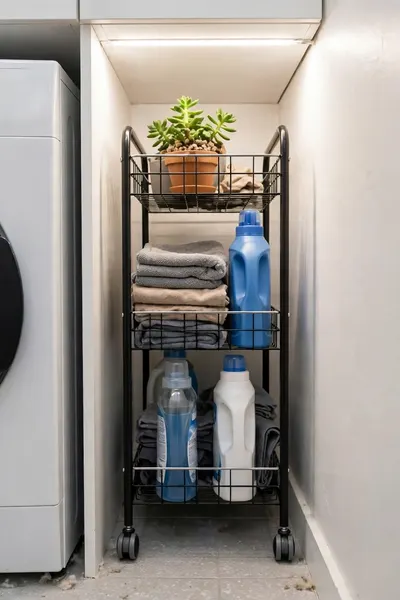
Common Mistake: Buying the cart from a photograph without measuring your own gap. Laundry gaps vary wildly, from a hand span to nearly a foot, and a cart two centimeters too wide becomes expensive clutter standing in the hallway instead.
The Fix: Measure the gap at floor level and at machine height, since walls and machines both lean slightly, and order for the smaller number. Choose a cart one shade narrower than the gap so it rolls freely even when a bottle cap sticks out.
Load the cart by weight, bottles low and cloths high, so it rolls steady instead of tipping toward the pull. Give the top tier one pretty job, a small plant or the good hand towel, and the cart reads as part of the room instead of storage that escaped.
Peel and Stick Floor Tiles
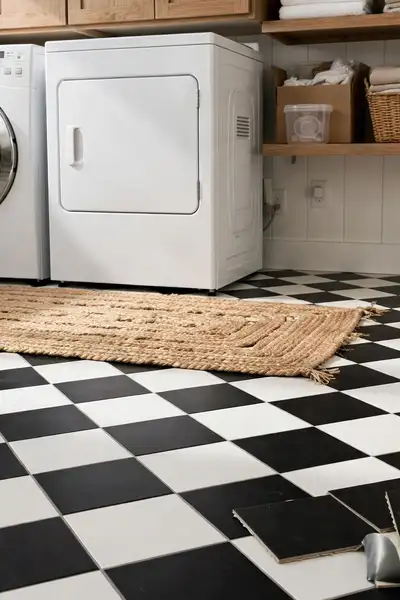
What You Need for a Weekend Floor:
- Peel and stick vinyl tiles, plus ten percent extra for cuts
- A degreasing cleaner and a full dry day before starting
- A utility knife, metal ruler, and a pencil for edge cuts
- A rolling pin or floor roller to press every tile firmly
- Spare tiles stored flat for future repairs
Floors set the room’s mood and are usually its ugliest surface, which is why this change photographs like a renovation. Work from the center line outward, keep a few spare tiles for the day one lifts near the sink, and let the pattern run under the machines only as far as your arms honestly reach.
Frequently Asked Questions
1. What is the cheapest way to make a laundry room look better fast?
Start with jars, labels, and one runner rug. Matching jars clear the visual noise in a day, labels keep it cleared, and the rug changes how the room feels underfoot. Most small rooms look honestly finished after those three, long before any painting happens.
2. How do I decorate a laundry room with no windows?
Light is the whole job. Choose warm white paint, add under cabinet strips, and hang one small mirror or metal framed print to bounce what light exists. Keep patterns pale and medium scaled, and let one plant be a good fake rather than a real one slowly fading.
3. Can renters use these ideas without risking their deposit?
Most of them, yes. Peel and stick wallpaper and tiles, battery light strips, carts, jars, baskets, and hampers all leave no trace. Skip the cabinets, sink, and fixed counter unless your landlord agrees in writing, and photograph the room before you start for your own records.
4. What colors make a small laundry room feel bigger?
Warm whites and pale versions of sage, blue, or blush, kept in the same soft depth across walls and cabinets. One deeper accent, a door, a rug, or a hamper, gives the eye a resting point. Gloss and satin finishes bounce more light than flat paint in tiny rooms.
5. How do I keep open shelves from looking messy?
Limit them to what the week actually uses, group items in threes, and let baskets and jars do the hiding. The shelf rule is simple: if an item has no weekly job, it belongs in a cabinet. A monthly five minute reset keeps the styling honest the rest of the time.
6. Where should I start if my laundry room is a closet?
With the door and the gap. A peg rail on the wall the door hides, a slim cart in the machine gap, and jars instead of boxes give a closet laundry its first real storage. Add the runner cut to size, and even a closet starts behaving like a room.
Conclusion
Twenty small decisions later, the most skipped room in the house can become the one that quietly makes you smile on wash day. Keep these laundry room decor ideas saved on Pinterest for your next free weekend, start with the jars or the runner this week, and share the list with a friend whose laundry corner deserves better. I’ve seen how small changes like these can completely shift the way a space feels, and few spaces reward them faster than this one. One idea at a time is plenty, and this week counts.