21 Best Bedroom Plants for Better Sleep and Clean Air
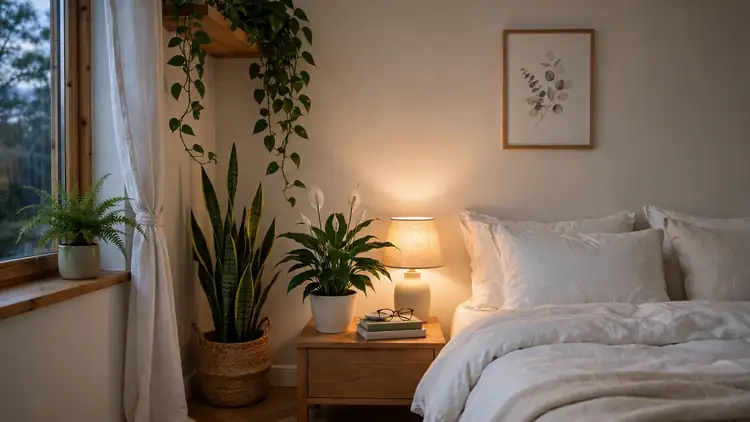
You spend a third of your life in one room, yet it is usually the last room to get anything living in it. The best bedroom plants change that equation quietly: a snake plant releasing oxygen while you sleep, jasmine scenting the evening air, a fern softening the light beside your bed.
I’ve noticed bedrooms with two or three well chosen plants simply feel calmer to walk into at night, and the science agrees on scent, humidity, and stress. This guide covers 21 honest picks for every light level and every skill level, including the dark corner and pet shared versions.
What Makes a Plant Right for the Bedroom
Four checks separate a bedroom plant from a living room plant with hype. It should ask little light or handle yours honestly, smell gentle or not at all near your pillow, forgive irregular watering, and suit the way you sleep, curtains closed, door shut, weekends away.
Now the honest part about clean air. The NASA study cleaned sealed test chambers, not bedrooms, and later research suggests you would need a jungle per room for the same effect. Choose the best bedroom plants for sleep, scent, calm, and humidity balance, and let air cleaning be a bonus, not the promise.
Snake Plant
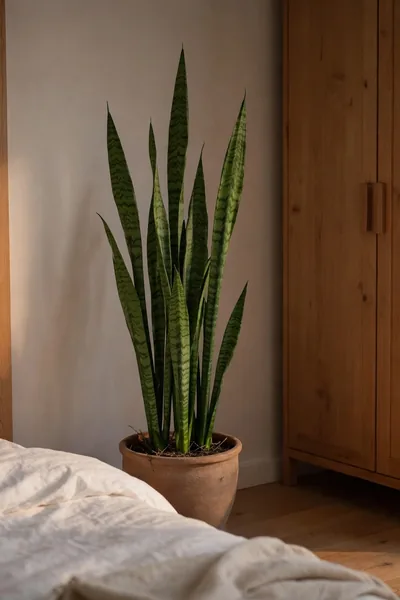
- Light: bright indirect is best, but it tolerates the dim corner most bedrooms actually offer
- Water: once every 3 to 4 weeks; the thick roots store their own supply
- Best spot: floor corners beside wardrobes and dressers, where upright leaves take no sprawl
- Night work: stores carbon dioxide by day and releases oxygen after dark
- Pet note: mildly toxic if chewed, so keep it out of nibbling reach
Few houseplants pay rent in two shifts. The snake plant stores carbon dioxide by day and releases oxygen through the night, a desert survival trick, so it works while you sleep. In my experience, it is also the one plant beginners cannot overwater into trouble, since its thick roots store their own supply.
Also View: Indoor Plant Care for Beginners That Actually Works
Peace Lily

Quick Tip:
Peace lilies talk to you. When the leaves droop, water deeply that same day and watch the whole plant lift again within hours. Constant drooping, though, means the pot is too small or the room too dry, not just thirst.
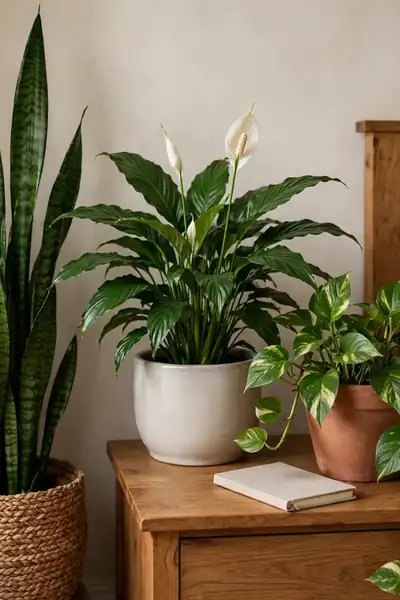
White blooms above glossy leaves give the peace lily a calm, spa like quality, and it earns its keep another way: it tells you when it is thirsty. The whole plant droops dramatically, then stands back up within hours of watering, a signal even distracted owners rarely miss.
Aloe Vera
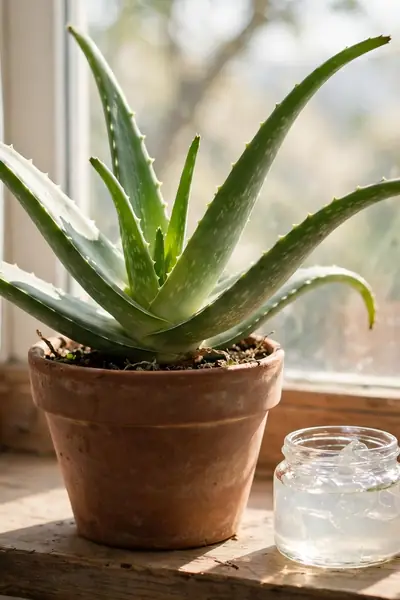
Common Mistake: Treating aloe like the low light plants on this list and parking it on a dresser across the room.
The Fix: Give it the brightest sill you own and water only when the soil is dry all the way down.
Few bedroom plants pull double duty like aloe. Snap a leaf and the clear gel cools sunburn, kitchen nicks, and dry winter skin, which is why grandmothers kept one within reach for decades. The Fix is placement: it belongs on the sunniest sill you have, because a dim corner stretches it pale and floppy fast.
Spider Plant
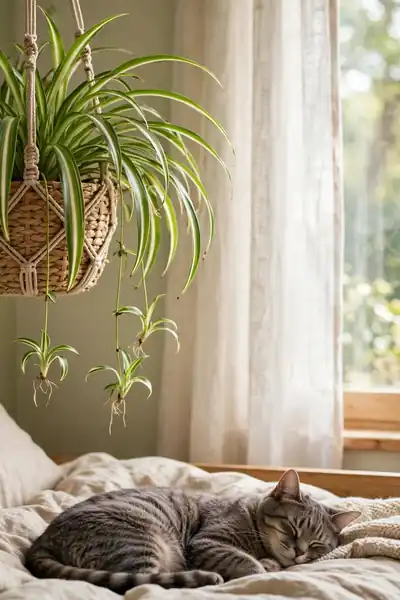
What You Need:
- A hanging basket or high shelf for the arching leaves
- A pot with drainage, since roots rot in standing water
- Bright to medium indirect light
- A spray bottle for weekly misting in dry rooms
- Scissors for snipping plantlets to share or replant
I’ve noticed owners who mist weekly or group it with other plants see far fewer brown tips through winter. The plantlets root in a glass of water within two weeks, which makes this the cheapest plant on the whole list to multiply. Non toxic to cats and dogs, it is also the safest choice here for a pet shared bedroom.
Also Explore: Start a Plant Flipping Side Hustle From Your Windowsill
Lavender

Before: A leggy lavender on a dim dresser, few flowers, almost no scent, slowly stretching toward the window.
After: The same plant on the sunniest sill in a gritty, free draining clay pot, compact, flowering, and perfuming the whole corner by evening.
Lavender earns its bedroom fame honestly, but only where the sun cooperates. Give it air movement and the brightest light you have, and it rewards you with the exact scent sleep products spend fortunes imitating. Keep it across the room from the pillow if strong fragrance bothers you at close range, and skip steamy bathroom shelves entirely.
Boston Fern

Do This:
- Keep the soil lightly moist at all times, never soggy, never bone dry
- Mist the fronds weekly, daily in homes with dry winter heating
- Set the pot on a pebble tray of water for steady humidity
- Hang it or raise it on a stand so the arches can fall freely
Avoid This:
- Placing it beside a radiator or heating vent
- Letting it dry out completely between waterings
- Direct midday sun, which scorches the fronds pale
- Crowding it against a wall where air cannot move
Ferns read a room’s humidity like a gauge, and bedrooms near a steamy ensuite suit them beautifully. The one real demand is consistency: soil that stays lightly moist, weekly misting in heated winters, and a pebble tray of water under the pot when the air turns dry.
Pothos
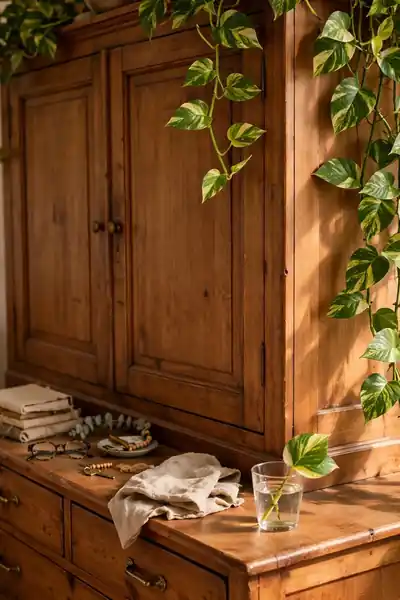
Light: Low to bright indirect | Water: Every 2 weeks | Skill Level: First plant friendly | Pet Note: Toxic if chewed, hang it high
Trail it from the top of a wardrobe so the vines fall where curtains cannot, or pin a line of leaves along a shelf edge. Cuttings root in a plain glass of water within weeks, making this the friendliest plant here for a first bedroom jungle attempt.
English Ivy
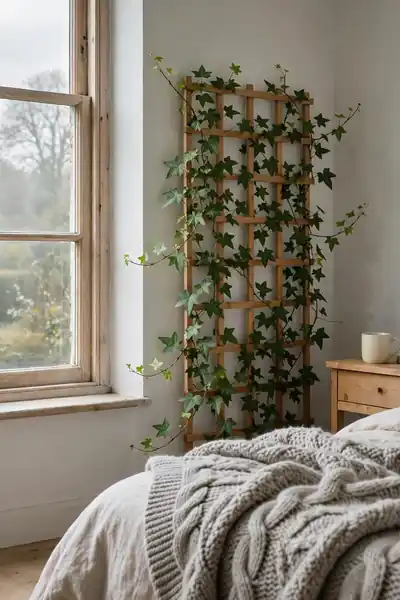
English ivy adds a different texture, small lobed leaves on climbing stems softening hard furniture lines. It prefers the cooler side of comfortable, one of few plants happy in a room kept chilly for sleep. Give it a small trellis, a moss pole, or a picture rail to wander along.
Dry heated air is its one real enemy, inviting the spider mites that love ivy most. A monthly shower in the tub keeps them away and washes dust off the leaves. Keep it pruned to the length you planned, because a happy ivy in a cool room grows faster than most owners expect.
Rubber Plant
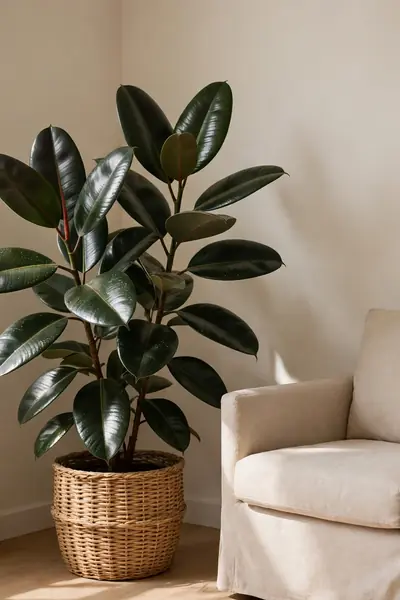
- Size: grows 1 to 2 feet a year indoors until it fills a corner like furniture
- Light: bright indirect keeps the leaves deep green; dim rooms fade them dull
- Water: when the top 2 inches of soil are dry, roughly every 2 weeks
- Extra job: those big leaves collect visible dust, so they need a monthly wipe
- Pet note: the milky sap irritates mouths, so place it beyond chewing reach
Rotate the pot a quarter turn each month so it grows upright instead of leaning toward the window, and wipe the leaves monthly, because dust on leaves that size shows like dust on a piano. It is the statement piece of this list. One plant, one corner, and the room suddenly looks furnished.
ZZ Plant
Quick Tip:
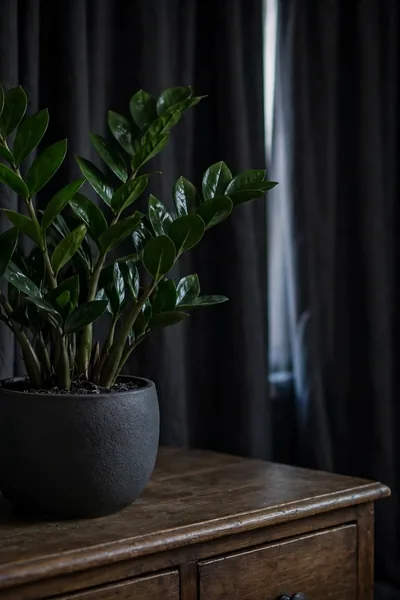
Water by the calendar and you will kill it with kindness. Water by the soil instead: push a finger 2 inches down, and if it comes out dry and clean, drink time has arrived. In a dim bedroom that can honestly mean once in 5 or 6 weeks.
Leaves yellow and stems soften only when owners water on a schedule instead of checking the soil. In dim rooms it grows slowly and stays compact, which for a bedroom is less a flaw than a feature. Set a phone reminder for once a month, and even that will often be early.
Heartleaf Philodendron

Common Mistake: Letting one champion stem race 6 feet along the shelf while the base of the plant turns thin and bare.
The Fix: Pinch long stems just above a leaf node every few months; the plant answers with two new stems and grows fuller, not longer.
Heart shaped leaves on long, soft stems give this philodendron the gentlest trail on the list. It reads softer than pothos, less formal, more like the plant version of a rumpled linen shirt, and that softness is exactly why it suits a room built for rest.
Chinese Evergreen
What You Need:
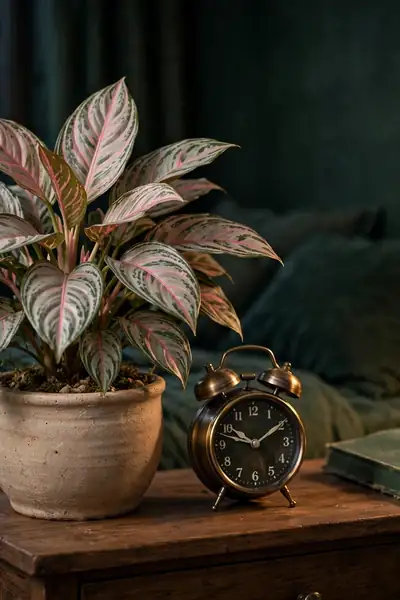
- A nightstand or dresser spot in low to medium indirect light
- A pot with drainage and roomy, loose soil
- Warmth: this plant sulks below about 60 degrees at night
- Patience, since dim rooms slow its growth to a leaf a month
- A soft cloth for monthly leaf dusting
It accepts the low light of a north facing bedroom without sulking, asking only for patience: growth is slow, a leaf or two a month in dim rooms. That slowness suits bedrooms, where a plant that stays the size you bought is often the honest wish.
Dracaena
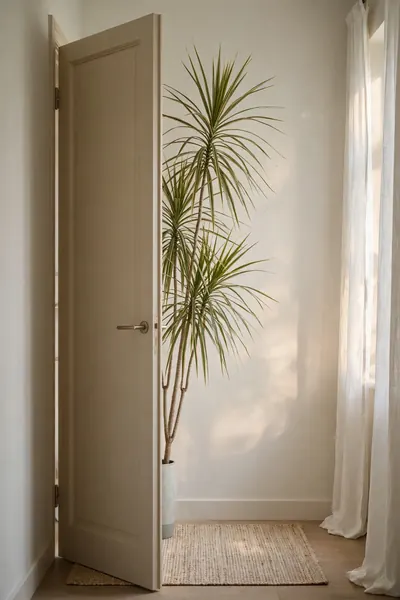
Before: A tall empty slot behind the bedroom door or beside the wardrobe, too narrow for furniture, catching dust and lost socks.
After: One slim dracaena cane rising 5 feet from that exact slot, leaves spraying overhead like a slow green fountain, floor footprint smaller than a shoebox.
It tolerates low light, though the striped varieties fade toward plain green there, and it sulks at fluoride in some tap water, showing brown leaf edges. A jug of rainwater, or tap water left standing overnight, keeps the edges clean. Trim brown edges with clean scissors, following the leaf’s natural shape.
Parlor Palm
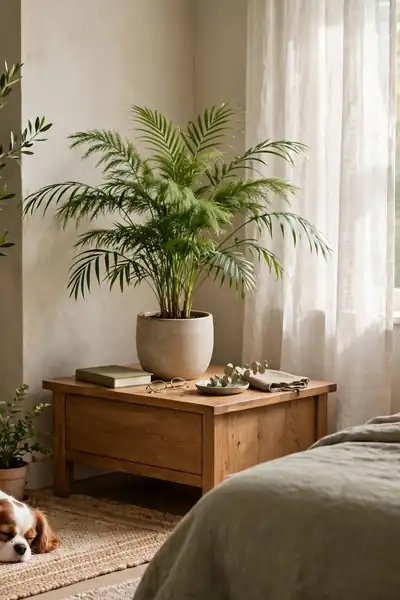
Do This:
- Give it steady, light moisture and indirect light
- Group small palms at different heights for a layered corner
- Mist fronds in heated winter rooms
- Keep it on nightstand scale while it grows slowly
Avoid This:
- Direct sun, which bleaches the fronds yellow
- Soggy soil and pots with no drainage
- Cold drafts from winter windows
- Expecting fast growth; two feet is a mature indoor size
It grows slowly to about 2 feet on a nightstand scale, asks for steady light moisture, and carries no toxicity warnings for cats or dogs. Group three small ones at different heights and the corner reads like a boutique hotel. That gentle movement makes a still room feel alive at night.
Jasmine
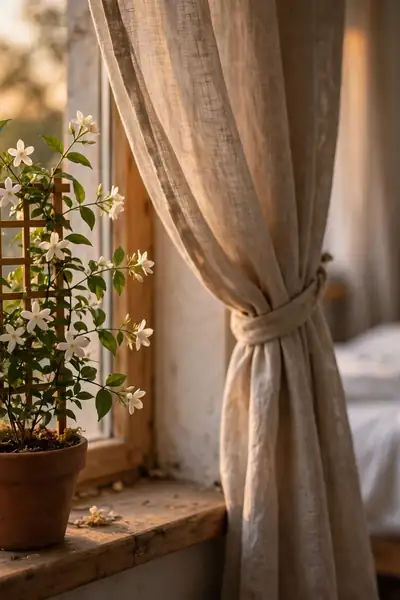
Scent Peak: Evening | Light: Brightest sill | Water: Steady while flowering | Best For: Sleep scent lovers
One small plant can scent the whole room by nine o’clock, sweet but green, nothing like a candle’s blunt sweetness. Give it a tiny trellis to climb, the brightest light you have, and steady moisture while it flowers. Evening is when the perfume peaks, which is suspiciously perfect timing for a bedroom plant.
Gardenia

Gardenia is the diva of this list and does not apologize. Creamy blooms carry the richest perfume here, the kind that makes guests ask what candle is lit when no candle exists. It wants bright light, steady humidity, and soil kept evenly moist, and it drops buds when any of the three wobbles.
That honesty cuts both ways: meet its terms and a gardenia flowers for months, filling evening air no spray can imitate. Keep it across the room from the pillow; at arm’s length the perfume turns heavy. Mine thrived only after it moved beside a humidifier and stayed there.
Rosemary
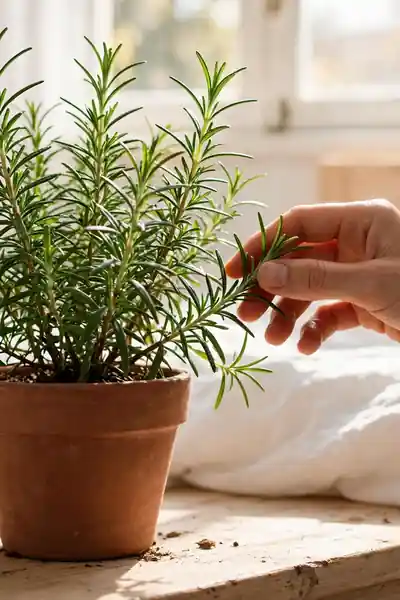
- Scent: clean and herbal, freshness instead of flowers
- Light: the sunniest sill in the house, no exceptions
- Water: sparingly; wet feet kill it faster than drought
- Bonus: snip sprigs for the kitchen, so it earns its sill twice
- Pet note: the herb itself is safe, though the oils are strong for small animals
Not everyone sleeps better in a cloud of flowers. Rosemary offers the other road. Brush the stems while you pass and the oils release on contact, a small ritual that suits people who find floral rooms cloying. It wants a strict watering hand and the brightest light you can give it.
Eucalyptus

Quick Tip:
The famous shower bunch trick works in a bedroom too. Tie fresh cut stems where the evening air moves past them, near a door or an open window path, and the scent releases gently for two to three weeks before the stems need replacing.
For a bedroom, a small potted one on the sunniest sill, or fresh stems in a vase by the door, both work. Either way, keep it away from pets, since the leaves are toxic if eaten, and refresh vase stems the moment the scent fades.
Moth Orchid
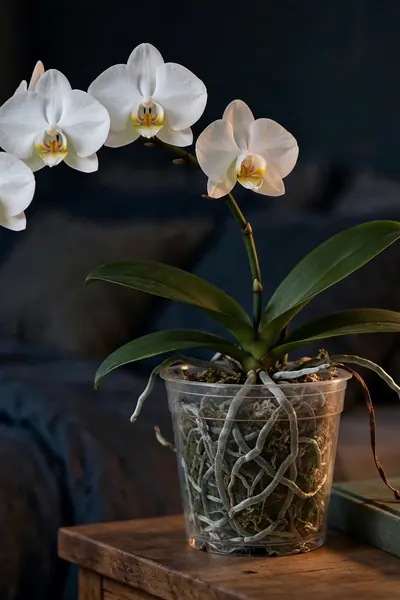
Common Mistake: Watering with ice cubes because the tag suggested it, chilling tropical roots a little more every single week.
The Fix: Soak the clear pot in room temperature water for 10 minutes weekly, drain it fully, and read the roots: silver means thirsty, green means fine.
Most flowering plants clock out at sunset; the moth orchid quietly clocks in. Like the snake plant, it releases oxygen at night, and its blooms last two to three months. The roots tell the story through a clear pot: silver roots are thirsty, green roots are fine.
Cast Iron Plant
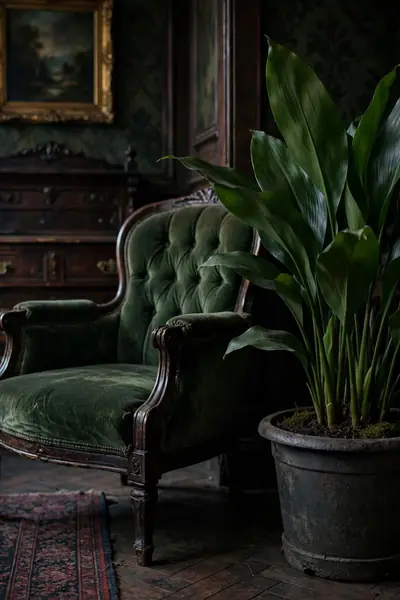
What You Need:
- The darkest bedroom corner you have been apologizing for
- Any sturdy pot; this plant is not fussy about looks
- A watering can you will use roughly once a month
- No special soil, no fertilizer schedule, no grow light
- Patience with slow growth, a few leaves a year
It tolerates the darkest corner on this list, irregular watering, and forgotten holiday weeks. Growth is slow and proud of it. If every plant you have owned has died in a dark room, this is the one that finally breaks the streak, which is exactly the confidence a new plant owner needs.
Weeping Fig

Before: A bright bedroom corner with hard light, bare walls, and nothing between the window and the bed to soften the morning.
After: One graceful small tree in that corner, leaves filtering the light into moving patterns, the whole room reading calmer by breakfast.
A small indoor tree changes a bedroom’s whole register, fine leaves filtering window light into moving patterns all morning. Choose the brightest corner once, settle it there, and it repays the loyalty for years. Keep the soil lightly moist and the spot draft free, and accept the opening sulk as rent.
Frequently Asked Questions
1. Do bedroom plants really clean the air?
Only a little, honestly. The famous NASA results came from sealed chambers, and a real bedroom would need dozens of plants for the same effect. The proven gains are sleep, scent, humidity balance, and calm. Treat cleaner air as a small bonus riding along with bigger benefits.
2. Which plants release oxygen at night?
The snake plant, aloe vera, and moth orchid use a desert style process that releases oxygen after dark. The amounts are modest, so think of it as a gentle nudge in the right direction, paired with the fresher feel these plants bring to a closed room overnight.
3. What is the best first plant for a dark bedroom?
The cast iron plant, with the ZZ plant a close second. Both accept low light and monthly watering, and both forgive the learning mistakes every new owner makes. Start with one, keep it alive for a season, and let that small win fund your confidence for the brighter sill plants.
4. Which plants are safe in a bedroom with cats or dogs?
The spider plant, Boston fern, and parlor palm carry no toxicity warnings and suit pet shared rooms well. The snake plant, pothos, ZZ plant, and several others are toxic if chewed, so trail or place those beyond reach, or choose from the safe three first.
5. How many plants should a bedroom have?
Two or three suit most rooms: one near the bed for scent or night oxygen, one filling a corner, one trailing from height. More is wonderful if light allows, but a crowded jungle raises watering work and night humidity, and sleep still outranks collecting.
6. Why do my bedroom plants keep getting brown leaf tips?
Usually dry air and uneven watering, not disease. Heated winter rooms pull moisture from leaf edges first. Group plants together, mist the thirsty kinds weekly, and water by checking the soil instead of following a calendar, and most tips stay clean through the season.
Conclusion
Better sleep rarely needs a bigger budget; sometimes it needs leaves. Keep this guide to the best bedroom plants saved on Pinterest, start this week with one forgiving plant on the nightstand or sill, and share the list with a friend whose bedroom still feels like a storage room with a bed in it. I’ve seen how a little green can completely shift the way a room settles at night, and the first plant is always the one that changes the habit. Choose yours tonight, water it in, and sleep well.