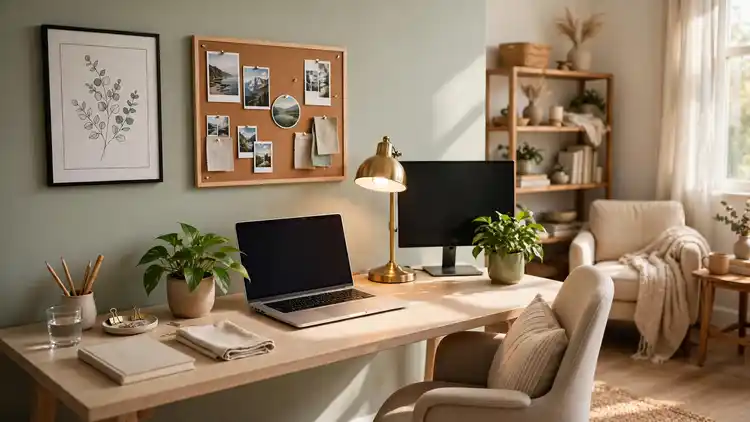
20 Inspiring Office Decorating Ideas to Boost Focus
You sit down to work and your eyes do everything except work: the pile, the cords, the bare wall, the chair that already hurts. The room is not neutral. It is quietly arguing with your focus all day. These office decorating ideas settle that argument, one fix at a time.
In my experience, focus problems at home are usually room problems in disguise. Fix the biggest distraction first and motivation follows, because the room finally stops spending your attention for you.
Inside are 20 ideas in the order I would do them: distraction removers first, then light, comfort, and calm styling, most of them free or cheap and all of them renter safe. Start with your worst offender this weekend and feel the room change by Monday.
Start With Your Biggest Distraction

Every office has one thing that steals focus: the pile of unopened mail, the tangle of cords, the chair that hurts by noon. Decorating around it never works, because your eyes find it all day. Name your biggest distraction first, before you buy or move a single thing.
Then work outward from that fix, because the relief is instant and it funds your motivation. These 20 office decorating ideas follow that order: distraction removers first, comfort next, beauty touches last. Most readers find theirs in the first five sections, and fixing it changes the room’s feel in a weekend.
Clear Desk, Clear Zones

- Work zone: the space in front of you holds only the current task
- Tool zone: one side tray holds what you reach for every day
- Personal zone: the back edge holds photos and one loved object
- Landing rule: anything with no zone goes in a drawer or leaves
- Reset: two minutes at day’s end returns every item to its zone
A desk works best in three zones: the work zone in front of you holds only the current task, the tool zone at one side holds what you reach for daily, and the personal zone at the back holds photos and one object you love. Items without a zone get a drawer or a home.
Also View: 20 Serene Home Office Aesthetic Ideas You’ll Truly Love
A Color Palette That Calms Focus

Quick Tip:
Test your palette on the wall you face, not the one behind you. The color in your eyeline all day does the focus work; the wall behind your chair only shows on video calls. One calm color facing you beats four walls of a color you never actually see.
Color is the cheapest focus tool in the room. Soft blues and greens are linked often with calm concentration, warm neutrals keep long hours from feeling cold, and one deeper accent gives the eye a place to rest. Loud wall colors and five competing brights do the opposite, keeping the brain slightly on alert.
Task Lighting Done Right

Common Mistake: Working under the ceiling light alone, or aiming the desk lamp at the screen. The first flattens the room and tires your eyes; the second adds glare that makes the screen harder to read.
The Fix: One lamp with a warm bulb, positioned to light your papers and keyboard from the side opposite your writing hand. The work glows, the screen stays calm, and shadows fall where they do not matter.
Most home offices run on one ceiling light, which flattens everything and tires eyes by three in the afternoon. A desk lamp with a warm bulb aimed at your work, not your screen, ends the squinting and quietly tells your brain the workday has a shape. It is the fastest comfort upgrade in this guide.
A Plant Within Sight
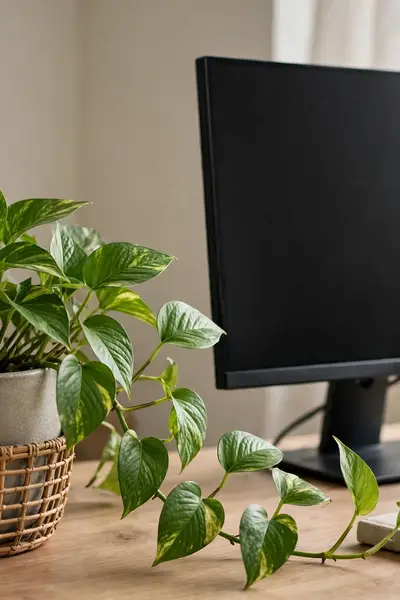
What You Need:
- One forgiving plant: pothos, snake plant, or ZZ plant for beginners
- A pot with drainage and a saucer to protect the desk surface
- A spot inside your normal eyeline, not hidden behind the monitor
- A weekly watering day tied to something you never skip
- A backup plan for holidays, a neighbor or a self watering spike
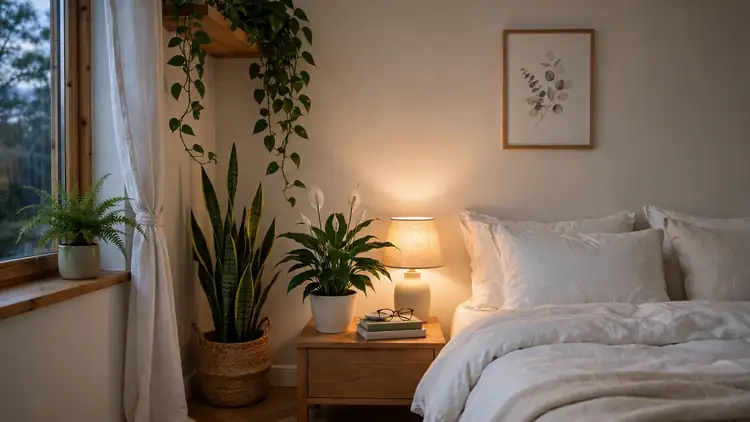
A plant is the one desk object that works while you ignore it: softening the room’s hard lines, adding moisture to dry indoor air, and giving your eyes a living rest point between screens. Choose a pothos or snake plant if your record with plants is honest, and keep it where your gaze already lands.
Inspiring Wall Art at Eye Level
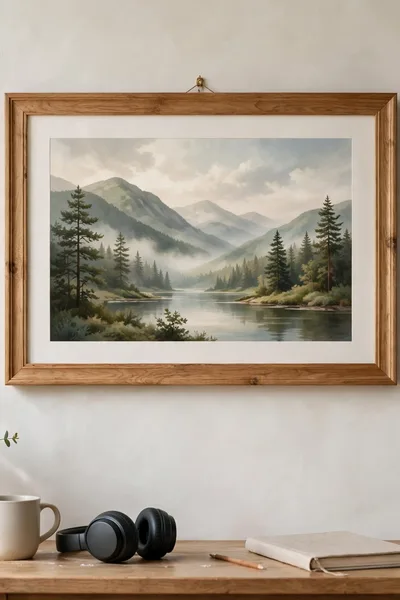
Before: A blank wall your eyes search all day, finding nothing, until your hand finds your phone instead.
After: One chosen piece at eye level gives your gaze a kind resting place, and short mental breaks happen without leaving the chair or losing the thread of work.
A bare wall in your eyeline is a missed opportunity your brain fills with wandering. One piece of art you chose, hung where your eyes lift between tasks, gives the mind a pleasant parking spot that is not your phone. In my experience, people work longer in rooms that give their eyes somewhere kind to go.
A Vision Board Inspiration Corner

Do This:
- Put the board where you see it the moment you sit down
- Mix goal images with one or two real deadline dates
- Retire every achieved goal photo with a small celebration ritual
- Keep white space on the board; a crowded board stops inspiring
Avoid This:
- Pinning twenty goals at once until none of them feel real
- Hanging the board behind you, where it only decorates calls
- Letting old, dead goals stay up for a full year
- Making the board only about money; add life goals too
A vision board works because goals fade when they are only in your head or your notes app. Pinned where you sit down every morning, they greet you before email does. Keep it to one board, update it when a goal is met, and let it stay slightly aspirational, because a finished board stops pulling.
A Chair Setup That Supports Long Hours
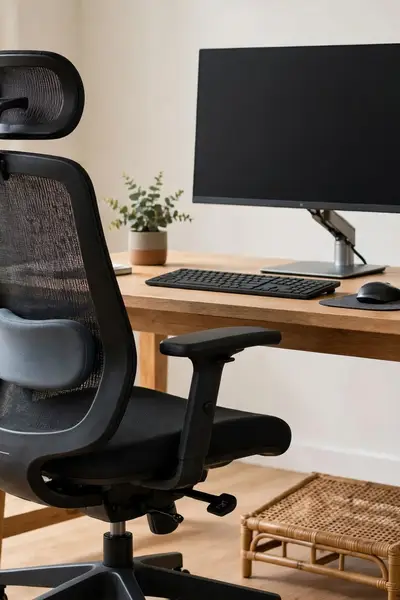
Cost: $0 to $40 in fixes | Best For: Back comfort and fewer breaks | Result: Longer, calmer work sessions | Pro Tip: A cushion beats a new chair
Discomfort is a focus leak you cannot decorate over. A chair that supports your lower back, feet flat, screen at eye level, removes the fidgeting and shifting that break concentration every twenty minutes. If a new chair is not in the budget, a lumbar cushion and a footrest deliver most of the same relief.
Cable Management That Disappears
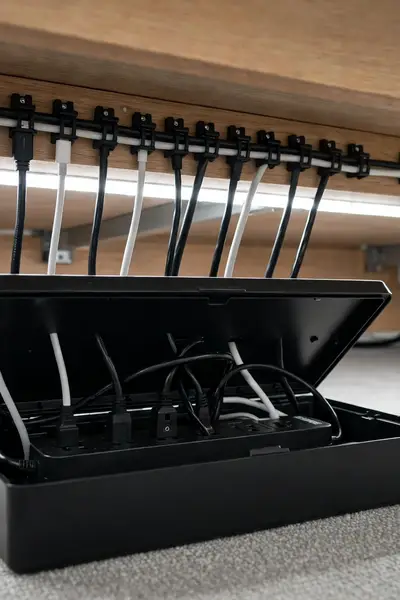
Cords multiply quietly: laptop, monitor, lamp, phone, printer, until the desk’s edge looks like a nest and dust gathers where you cannot reach. A cable box on the floor, one power strip inside it, and clips guiding the rest along the desk’s back edge make the whole tangle disappear in twenty minutes.
Label both ends of every cord while you are down there. Future you, unplugging one device without killing the Wi-Fi router, will be grateful. A clean cord run also makes the desk feel bigger, because the eye stops tripping over lines that lead nowhere.
Functional Storage Within Reach

- Daily tools: pens, notebook, charger in the top drawer or desk tray
- Weekly tools: files and supplies in deeper drawers or a side shelf
- Archives: last year’s papers boxed in a closet, out of the room
- One inbox tray for new papers, emptied every Friday afternoon
- Labels on every box, because memory is not a storage system
Storage fails when it is organized by how things look instead of how often they are touched. Daily tools belong within arm’s reach, weekly tools in the desk drawers, and archives in a closet box. Arrange by frequency and the desk clears itself, because everything you grab daily has a home beside you.
A Whiteboard or Wall Planner
Quick Tip:
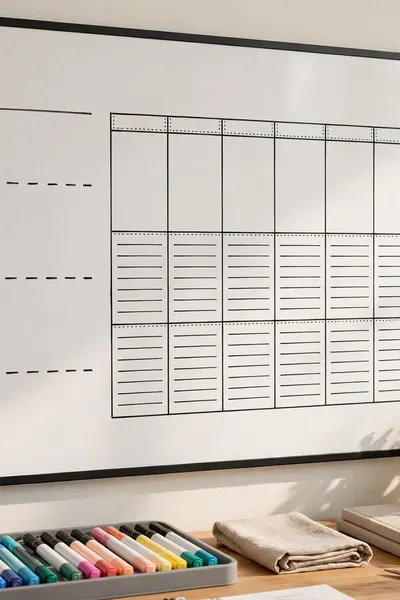
Limit the board to three daily priorities, written the night before. A board that lists fifteen tasks teaches your brain to ignore it by Tuesday. Three clear targets, wiped clean as they finish, turn the board into a scoreboard you actually want to look at.
A whiteboard turns vague pressure into a visible plan. Three priorities for the day, the week’s deadlines, one long term goal in the corner: seeing them at a glance settles the mental loop of trying to remember everything. Erase finished tasks fully; the blank space you earn is its own small reward.
Desk Position and Natural Light
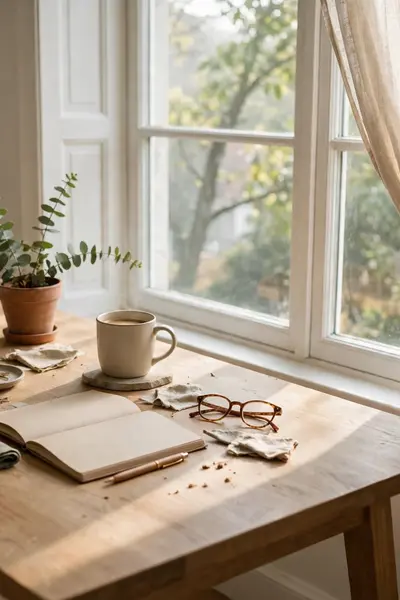
Common Mistake: Pushing the desk against the wall under the window, facing into the room’s darkest corner, or facing the window head on so the screen fights the sun all day.
The Fix: Turn the desk sideways to the window. Light falls across your work from the side, the screen keeps its contrast, and your eyes get a green, living view when they lift.
Where the desk sits decides how the room feels more than most furniture does. Face a window and daylight lifts your mood but can glare on the screen; sit sideways to it and you get light without the glare. The sideways seat is the one most people keep once they try both for a week.
Also Explore: 22 Smart Small Office Ideas for Tight Corners at Home
Personal Photos, Kept to Three

What You Need:
- Three favorite photos, printed at the same size for calm
- Matching simple frames, so the set reads as one gallery
- A spot on the personal zone wall or desk back edge
- One swap each season if you like freshness without clutter
- The courage to store the rest in an album, not the office
Photos motivate differently from art: they remind you who the work is for. Three favorites in matching frames read as a calm gallery and keep their meaning. Cover the wall in twenty snapshots and the eye stops seeing any of them, the same way a crowded desk stops meaning anything is important.
A Scent That Signals Work Time

Before: Work and rest blur into one long day in the same chair, and the evening never really starts.
After: One scent lit at nine and blown out at five gives the day edges. Your brain learns the smell means work the way a bell means class, and focus arrives faster each morning.
Scent is a work switch when it is used with rules: one candle or diffuser, lit only during work hours, always the same scent. Within two weeks your brain learns the smell means focus, the way a uniform means a shift. Blow it out when work ends and the evening gets its own signal too.
Soft Surfaces That Quiet the Room
Do This:
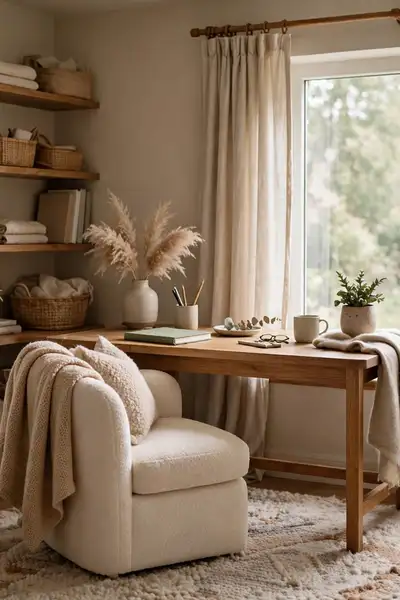
- Put a rug under the desk and chair wheels first
- Hang curtains even on small windows to soften the glass echo
- Add one cushioned surface where sound bounces most
- Keep a throw on the chair for warmth and sound softening
Avoid This:
- Covering every surface until the room feels like a pillow fort
- Choosing a rug so thick the chair wheels stop rolling
- Ignoring the door, the biggest hard surface in most offices
- Buying soft pieces in colors outside your calm palette
Hard rooms are loud rooms, and loud rooms tire the brain even in silence, because every sound bounces and sharpens. A rug under the desk, curtains at the window, and one soft chair pad absorb the echo until calls sound warmer and your own typing stops announcing itself to the whole house.
A Styled Shelf With Breathing Room
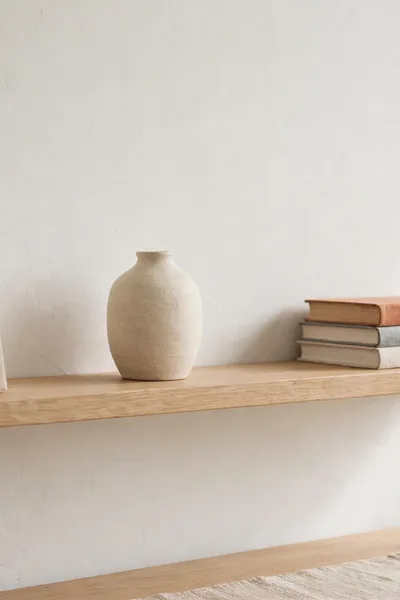
Cost: $0 with what you own | Time Needed: 20 minutes | Best For: Calm peripheral vision | Result: A shelf that rests the eye
A shelf styled with breathing room looks expensive and feels calm to work beside: groups of books, one object, then honest empty space. The emptiness is the design. Cram every inch and the shelf becomes visual noise in your peripheral vision all day, which is the opposite of what an office shelf is for.
A Small Break Corner

A break corner sounds like a luxury until you notice where breaks happen now: in the work chair, phone in hand, eyes still on the inbox. One different seat, a reading chair or floor cushion away from the desk, gives breaks a real location, and five minutes there restores more than twenty minutes of scrolling at the desk.
Keep the corner work free by rule: no laptop, no mail, no calls. A book, a plant, and good light are its whole job. Rooms that protect one non work spot protect the worker, and focus comes back to the desk faster after every break.
A Desk Riser or Standing Option

- Choose a riser wide enough for monitor, keyboard, and notebook
- Set standing height so elbows bend at a right angle, screen level
- Start with twenty minutes standing per hour, not full days
- Keep a soft mat under your feet for standing comfort
- Lower the riser for deep focus writing and detailed work
The afternoon energy dip is often a posture problem wearing a clock’s disguise. A simple desk riser lets you stand for calls and light tasks, and standing even twenty minutes an hour keeps blood and ideas moving. Lower it back down for deep writing work, and the desk serves both kinds of hours.
Greenery on a Shelf or Wall

Quick Tip:
Group shelf plants in odd numbers, three or five, at different heights. The eye reads grouped greens as one calm design. Single plants scattered on every surface read as clutter that happens to be alive, and clutter is the thing this whole guide is removing.
Not every office has a sunny spot for a living plant, and the shelves still deserve green. A trailing faux plant on a high shelf or a small green wall panel softens the room’s edges without water or light worries. Mix one real plant in if you can; the eye rarely knows which is which.
A Wall Clock for Time Awareness
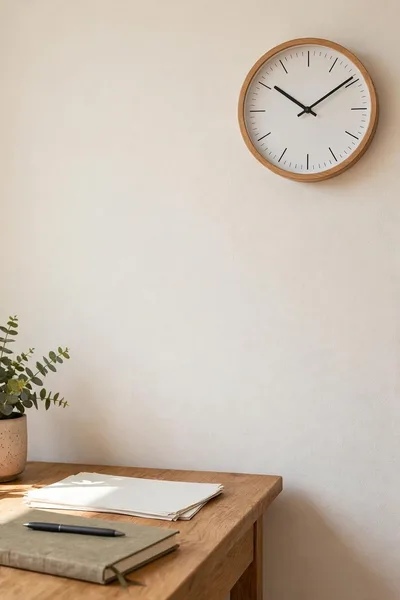
Common Mistake: Checking the time on your phone, where one glance at the clock becomes ten minutes of messages and feeds you never planned to open.
The Fix: Hang one plain clock where you can see it without turning around. Time stays visible, breaks stay honest, and your phone stays face down where it belongs during deep work.
A wall clock is the oldest focus tool there is: it shows time passing without a single notification attached. Checking your phone for the time costs most people ten minutes of scrolling they never planned. A clock at the room’s edge keeps you honest about hours and guards the shape of your day quietly.
Small Seasonal Rotations
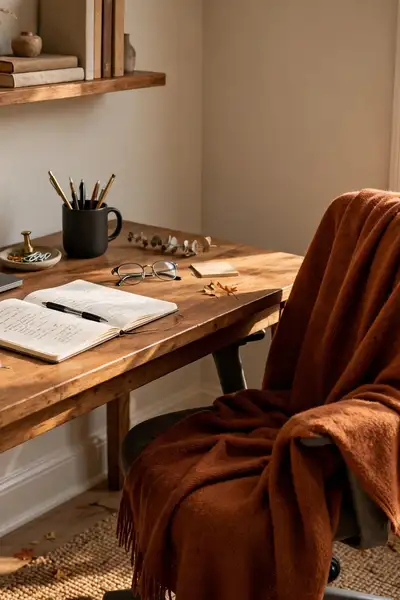
What You Need:
- One seasonal swap per season, kept deliberately small
- A throw or cushion cover in the season’s color
- One art print or photo to rotate at the desk
- A storage box where off season pieces wait their turn
- The rule of one in, one out, so freshness never becomes clutter
Rooms go stale the same way routines do, and a stale room quietly drains the wish to sit in it. Small seasonal swaps, a throw’s color, the art print, the desk plant’s pot, refresh the eye for almost no money. Change one thing each season and the office keeps feeling chosen instead of inherited.
Frequently Asked Questions
1. What is the first thing to fix in a distracting office?
Find the one thing your eyes land on most: usually clutter on the desk, a cord tangle, or a chair that hurts. Fix that single item first. The relief is immediate, and it gives you the motivation and the clear space to work through everything else.
2. Which colors are best for focus in a home office?
Soft blues and greens are the most linked with calm concentration, and warm neutrals like cream and light wood keep long hours feeling comfortable. Use one deeper color, navy or forest, as a small accent. Bright reds, oranges, and busy multicolor walls tend to keep the brain restless.
3. I work in a corner of my bedroom. Can these ideas still help?
Yes, most of them are zone based, not room based. A rug under the desk, a curtain or shelf as a soft border, a scent used only in work hours, and a break spot that is not the bed all create a work zone inside any room you have.
4. How much should I spend to make my office feel better?
Start with $0 to $50. Zones, cable cleanup, desk position, photos, and shelf styling are free, and a lamp or a lumbar cushion covers the biggest comfort wins. Spend more only when a real need appears, like a chair your back complains about daily.
5. How do I keep the desk from sliding back into clutter?
Give every item a zone, keep one inbox tray for new papers, and spend two minutes at the end of each day returning things to their zones. Clutter returns when items have no home; with zones and a tiny daily reset, the desk stays clear almost by itself.
6. Can a rental office be decorated without damage?
Yes. Everything in this guide is removable: peel and stick pieces, tension rods, command hooks, lamps, textiles, and furniture based storage. Nothing needs a nail or paint. Photograph the room when you move in, and you can return it to exactly that state when you leave.
Conclusion
Your office does not need a renovation. It needs order. Clear the zones, calm the colors, light the work properly, and give your eyes and body kind places to rest, and these office decorating ideas turn any spare corner into a room that helps you think. I’ve seen how small changes like these can completely shift the quality of a whole workday. Save this guide on Pinterest before your next office refresh, try your biggest distraction fix this weekend, and share it with a friend whose desk is also arguing with them. Your most focused week starts with one fix.




One Comment